Tag Archives: Process Post

Process Post: Google analytics

It was interesting to play around with Google Analytics and seeing how many people are visiting my site.

However, I had trouble going through Google Analytics during the tutorial in lecture today. Not sure why but the interface I saw on my end was really different from what Suzanne was showing.

For example, in the screenshot below, I only have two columns (Suzanne’s has three) and I don’t have a UA code.

Screenshot of Google Analytics Admin Page

Even some of the other stuff like the left side bar is different as well.

Not sure why this is happening…maybe I didn’t connect my site correctly? Or is this a new version of Google Analytics? But then again everyone’s should be the same because its Google…

This wasn’t as intuitive as I had hoped but hopefully we get it figured out!

Analytics

When thinking about analytics for a website, I always tried not to share my activity on the website or any data regarding my use cases. Sharing data always felt like a burden to me as knowing that the online space is not always safe, giving data to a website did not feel right. However, as I am building my own website now I can see that it can be very useful as a content creator.

Before taking this class, It never crossed my mind how useful it can be for content creators to receive data on the user’s use cases when browsing a website. Knowing how the user behaves and what works best for them is enormously helpful when deciding how to design my website. Furthermore, now that I am experiencing the content creators side I find that it can improve user usability just by knowing what parts of the website work and don’t work for my audience.

For example, little things such as how my audience accesses my guides can be useful information for me as I can design my website so that more popular content is easier to access. In addition, I will be able to tell what sorts of content works for my website and be able to get data on what content my audiences like. As someone who writes guides for a game, it is very useful to know what parts of my guides are useful for my audience and what isn’t. Being able to know what my audience wants to know about a character and how to build a character can definitely help my content in the future.

If I know that my audience spends the most time reading the different artifacts to build for a character, I can improve this section by providing a longer in-depth analysis of the artifacts. In exchange, I can shorten parts of my guide that people spend less time reading. Using tactics like this to improve my content can help further grow my website to a wider audience.

Although, I want to set up analytics for my website the process is not going smoothly. I find that trying to connect google analytics with WordPress causes a lot of issues not letting me set it up. It is an unfortunate process, but I do hope I can get it to work or have it work in the future If I do decide to continue to build my website as it can bring all sorts of benefits.

Essay: Filter bubbles and their creation of echo chambers and polarizing viewpoints

Introduction

Algorithms lurk beneath the surface of an individual’s every search and click on websites like Google and Facebook, gathering a user’s data to display information the company believes the user wants to see. These algorithms are portrayed as helpful to the user tailoring their experience in a personalized manner so that they may obtain the information that is correct for them (Google’s Search Algorithm and Ranking System – Google Search, n.d.). However, there is a more nefarious side effect of collecting data, that side effect is called a filter bubble. A filter bubble is an abstract concept to explain an online lens an individual may see through when an algorithm takes their data and only provides them with information representative of that data (Techopedia, n.d.). Filter bubbles are nefarious as their application sculpts a user’s point of view by continuously reinforcing their original viewpoint, blocking them from gaining a deep understanding and doing so without them realizing that it is happening. On the other hand, if the user is getting the information they want, then why does it matter to know all sides? While asking for and being presented with data the user wants to see may seem efficient and ideal in concept, the information the user cannot see deters them from knowing all sides of the coin restricting the user from obtaining a truly objective answer. To gain deeper insight, a user must be shown a breadth of answers. The solution to getting around filter bubbles and accessing that breadth of answers starts with understanding what effects they may have on the user. Such effects may hinder a person’s ability to profoundly question and obtain a well-rounded answer, due to filter bubbles and their propensity toward echo chambers, and polarizing viewpoints.

Echo chambers

Due to filter bubbles, a person’s ideologies tend to isolation (Berman and Katona, 2020). This isolation propels the person to seek information that reinforces their initial viewpoint, creating echo chambers. When an individual has an isolated view on a subject and they are searching for answers, they may gravitate towards information that instils confirmation bias on their point of view. Research has shown that people do not prefer to use opposing information to alter their views but instead will use the information they find that confirms their original viewpoint to double down on what they already believe (Kappes et al., 2020). Even if a user specifically searches for an opposing point of view, regardless of the information brought forth to them through filter bubbles, the user will tend to agree with the information that pertains to their isolated viewpoint. This propulsion towards their initial point of view builds an echo chamber from other users that have similar beliefs, thus confirming their own beliefs.

Echoing beliefs of a user’s viewpoints is encouraged and projected by social media groups that have aligning viewpoints of the user. Groups on social media platforms like Facebook are formed by like-minded people who join to have their views confirmed (Vicario et al., 2016a). When social media platforms allow the creation of groups coupled with algorithms that perpetuate confirmation bias, the ability to find a space that projects and confirms a user’s biased views allow the user to exist in an echo chamber.

An individual that joins a social media group that has aligning viewpoints ends up reverberating and strengthening their own viewpoints within that group. Vicario et al. (2016b) finds that when communities create homogeneous clusters (Facebook groups for instance) with like-minded people, these clusters become the primary driver of information isolation. Furthermore, Dandekar et al. (2013) devised a model that shows homophilous networks paired with an individual’s biased assimilation results in a more extreme view of information pertaining to their initial viewpoint. Therefore, the reverberation of the individual’s pre-existing reinforced views within a like-minded group on social media acts to create echo chambers that perpetuate information isolation.

Polarizing viewpoints

The by-product of echo chambers is that they tend to deepen polarizing viewpoints. Filter bubbles hinder users from expanding their viewpoints past their own, and this lack of expansive awareness generates polarizing societal views (Min et al., 2019). It is understood that echo chambers emerge from confirmation bias, but when a website’s filter bubble inducing algorithm contains social filtering mechanisms, these mechanisms have been shown to strengthen social polarization and disjoint echo chambers further (Geschke et al., 2019). Filter bubbles exacerbate social polarization as algorithms with social filtering propel the user towards echo chambers that provide confirmation bias.

Of the many infinite issues that may be addressed online, viewpoints on political topics are often inherently polarizing in nature and on the issue of Brexit, social media echo chambers increased social polarization. A study and analysis done on over 1 million Facebook users that searched for Brexit information in 2016 revealed their search results influenced polarization on the perception of Brexit (Vicario et al., 2017). The echo chambers Facebook created with their filter bubble inducing algorithms, socially and politically polarized the matter of Brexit by filtering search results and only showing results that were congruent to a user’s initial viewpoint.

Not only did filter bubbles induce social and political polarization on the issue of Brexit, but filter bubbles also induced social and political polarization during the 2016 U.S. presidential election. Analytical testing done by Guo et al. (2020) on over 50 million tweets from Twitter suggested social and political polarization of the presidential candidates Hilary Clinton and Donald Trump. Like Facebook, Twitter played a part in the social polarization of what information was presented to the user based on the sites’ respective algorithms. More specifically, socially polarized information pertaining to Hilary Clinton and Donald Trump during the 2016 U.S. presidential election. In combination, polarization and the creation of homogeneous communities or echo chambers were further exacerbated by filter bubbles during the 2016 U.S. presidential election.

Conclusion

When an individual uses social media and search engine platforms to try to access true information, how that individual receives that information and what part of the truth they receive depends on the website’s algorithms and the data gathered about the user. This selective and filtered process creates the phenomenon known as a filter bubble and while seemingly harmless and at times thought of as efficient, the filter bubble has a more nefarious side. This nefarious side being, algorithm induced filter bubbles perpetuate echo chambers, and polarizing viewpoints. These by-products that filter bubbles perpetuate are significant because they all have the ability to sculpt the mind of the user and propel them toward a singular, isolated ideological viewpoint without them even realizing it’s happening. Homogenous clusters called echo chambers allow a singular viewpoint of an issue to be chorused, thus strengthening this viewpoint through confirmation bias. These self-serving echo chambers lead to further polarization on society and their points of view regarding all matters, but particularly social polarization that is political in nature. The social polarization echo chambers cause in social media platforms such as Facebook and Twitter divides and reinforces a user towards their initial viewpoint, giving them information filtered specifically for them through their algorithms social filtering mechanisms. One by-product of filter bubbles begets the other and the sum of the whole stops an individual from being able to ask thoughtful questions and receive well-rounded, deep answers to those questions.


References

Berman, R., & Katona, Z. (2020). Curation Algorithms and Filter Bubbles in Social Networks. Marketing Science, 39(2), 296–316. https://doi.org/10.1287/mksc.2019.1208

Dandekar, P., Goel, A., & Lee, D. T. (2013). Biased assimilation, homophily, and the dynamics of polarization. Proceedings of the National Academy of Sciences, 110(15), 5791–5796. https://doi.org/10.1073/pnas.1217220110

Dwoskin, E., Stanley-Becker, I., & Kelly, H. (2020, November 4). Trump’s early victory declarations test tech giants’ mettle in policing threats to the election. Washington Post. https://www.washingtonpost.com/technology/2020/11/03/misinformation-election-social-text/

Geschke, D., Lorenz, J., & Holtz, P. (2019). The triple-filter bubble: Using agent-based modelling to test a meta-theoretical framework for the emergence of filter bubbles and echo chambers. British Journal of Social Psychology, 58(1), 129–149. https://doi.org/10.1111/bjso.12286

Google’s Search Algorithm and Ranking System—Google Search. (n.d.). Retrieved March 26, 2021, from https://www.google.com/search/howsearchworks/algorithms/

Guo, L., Rohde, J. A., & Wu, H. D. (2020). Who is responsible for Twitter’s echo chamber problem? Evidence from 2016 U.S. election networks. Information, Communication & Society, 23(2), 234–251. https://doi.org/10.1080/1369118X.2018.1499793

Kappes, A., Harvey, A. H., Lohrenz, T., Montague, P. R., & Sharot, T. (2020). Confirmation bias in the utilization of others’ opinion strength. Nature Neuroscience, 23(1), 130–137. https://doi.org/10.1038/s41593-019-0549-2

Min, Y., Jiang, T., Jin, C., Li, Q., & Jin, X. (2019). Endogenetic structure of filter bubble in social networks. Royal Society Open Science, 6(11), 190868. https://doi.org/10.1098/rsos.190868

Techopedia. (n.d.). What is a Filter Bubble? – Definition from Techopedia. Techopedia.Com. Retrieved February 22, 2021, from http://www.techopedia.com/definition/28556/filter-bubble

Vicario, M. D., Vivaldo, G., Bessi, A., Zollo, F., Scala, A., Caldarelli, G., & Quattrociocchi, W. (2016a). Echo Chambers: Emotional Contagion and Group Polarization on Facebook. Scientific Reports (Nature Publisher Group), 6, 37825. http://dx.doi.org.proxy.lib.sfu.ca/10.1038/srep37825

Vicario, M. D., Bessi, A., Zollo, F., Petroni, F., Scala, A., Caldarelli, G., Stanley, H. E., & Quattrociocchi, W. (2016b). The spreading of misinformation online. Proceedings of the National Academy of Sciences, 113(3), 554–559. https://doi.org/10.1073/pnas.1517441113

Vicario, M. D., Zollo, F., Caldarelli, G., Scala, A., & Quattrociocchi, W. (2017). Mapping social dynamics on Facebook: The Brexit debate. Social Networks, 50, 6–16. https://doi.org/10.1016/j.socnet.2017.02.002

Process post #9

Copyright is a very sensitive subject because there is nothing more resentful than losing what you have created to others. When I chose the subject “perfume review” as my blog theme, I wasn’t even thinking of copyright. Everyone has a different opinion about the perfume, but some may have the same opinion. Then am I violating the copyright of the person who wrote the perfume review before me? The copyright for the Perfume review seems very vague. The definition of copyright I know is that you shouldn’t take someone else’s idea and claim that it’s your idea. However, the copyright for the opinions on perfumes is so vague and extensive that I cannot give an accurate definition.

In the article You Say Tomaydo, I say no copyright infringement: Recipe book not an original compilation by Henein; recipes are not subject to copyright because they are technically just a collection of facts. I actually never thought about the copyright of recipes, so this really shocked me. Are the representative recipes of famous chefs in the market not copyrighted? Perhaps the chefs are already famous, so the public will know that they are the chef’s recipes without copyright. But what about the recipes that ordinary people post on their media? If the recipe becomes very popular in the future and everyone insists it’s my recipe, the person who first shared it will be very sad. Since the recipe also has no copyright, there cannot be a copyright for perfume reviews which are vaguer than recipes. However, I don’t want to take someone else’s ideas and offend them, so I should be more careful from now on.

Reference:

Henein, P. (2015, October 29). You say tomaydo , I say no copyright infringement: Recipe book not an original compilation – copyright – canada. You Say Tomaydo , I Say No Copyright Infringement: Recipe Book Not An Original Compilation – Copyright – Canada. Retrieved November 3, 2022, from https://www.mondaq.com/canada/copyright/439012/you-say-tomaydo-i-say-no-copyright-infringement-recipe-book-not-an-original-compilation

Process post #8

Today, all issues in the world spread rapidly online and dominate people’s beliefs and opinions. All the news and videos that spread online often divide and incite people. Online is no longer a safe place. Can we really believe all the content and videos we see online? As mentioned in “something is wrong on the internet” by Bridle, the culture, politics, and interpersonal relationships considered central to own identity were shaped by the internet, and in ways that are beneficial. However, looking at the many controversies and stereotyped writings raised online today, I often wonder whether this online space will positively affect future generations.

I want to talk about how scary media manipulation is to people. It’s an intractable subject, but I’ll try to give you my honest opinion. For example, the famous George Floyd incident who was murdered by a police officer in Minneapolis. This was a genuinely devastating incident, and the police officer’s reputation went down to a very bad image ever since this incident happened. I think that all unreasonable and discriminatory police officers should be removed from their job titles. Hopefully, there will be a change within the police department through this case.

However, I also agree that media incitement has made all the police’s perceptions so bad. Now people only post bad things about police in their media; they never post good things police have done. It seems like they are trying to find a way to hate the police department and make the public to distrust them. We should know that while there are bad police officers, many good officers work hard every day with good motives to help citizens. These days, there are less police personnel, and very few people are applying to the police. Police are essential resources in society, but if people’s stereotypes of police do not change, it is going to be hard for police to help citizens. I feel that so many people are easily swept away by the media these days. It is important to train ourselves not to be too influenced by the media. 

Reference:

Bridle, J. (2018, June 21). Something is wrong on the internet. Medium. Retrieved November 3, 2022, from https://medium.com/@jamesbridle/something-is-wrong-on-the-internet-c39c471271d2

Process post #7

I’m going to be honest .. most of the websites I visit are online clothes, so I’m going to talk about https://www.fashionnova.com/ website, which I frequently visit. I believe if you’re a woman and love shopping online, you will for sure know about fashionnova because it is so popular. Whenever I visit their website, I never think about their design. From a design standpoint, the site has a lot to offer but is a little bit messy. I can’t say this website is well organized because when I first entered this website, it took me a while to understand their homepage. There is too much content on one homepage. It is noticeable that the website editor wanted to emphasize their anniversary sale. Still, the typography they chose does not really suit the website, and the size is too big, which makes the letter blurry. Also, there are way too many pictures and fewer explanations. Trying to put so much content on one page makes it difficult for readers to grasp what they want to find at a glance.

I noticed that they did well with dividing categories by section using many menu bars. There are so many different types of clothes that it is difficult to find a specific style that consumers want. However, all of these types are divided into sections, allowing consumers to enter the website and immediately click on the item they want to buy to shop. In addition, at the bottom of the page, there are links for information necessary for consumers, such as how to contact them, and the track order is clearly stated. Sometimes it’s hard to find the contact information on some websites. It was good to see that the information that is important to consumers was well organized at the bottom. Moreover, in the part that lists the wearing image and price of clothes, the price is written bigger and bold than the name of the clothes, making the eyes comfortable. It is also very convenient for consumers to find the available colours of the design without having to click on them because the editor displays a small coloured circle showing the colour’s availability.

lots of menu bars

Overall it is a good website that contains lots of information and products. However, if they organize their homepage with fewer photos and a smaller size of the font, customers will find the website more accessible and more convenient. 

https://www.fashionnova.com/

Process post #6

In fact, I didn’t spend much time maintaining my blog in October. Whenever I enter my blog, I try to fix many loopholes, but it is difficult to touch them because I am afraid of making them worse. Finally, my blog has been reorganized to some extent, and I have learned a lot during that period. As I mentioned in my previous process post, my desire to make an aesthetically pleasing website is important, but accessibility also matters. I made up my blog, constantly thinking about whether the direction I was pursuing also coincided with the accessibility factor. 

My biggest problem was building my main page, which is the homepage. I tried to separate my homepage from the about page, but then there was not much to put on my homepage since I chose a very white and minimalistic theme. The white theme made my empty homepage look even more empty. So I decided to put the About section on the homepage. Therefore, as soon as readers enter my blog, they can see what this blog defines right away, and my blog looks full. Also, when readers first entered my blog, too many menus could confuse them, so I left a minimal menu bar and erased all the rest. Considering the accessibility factors of readers, I was heading in the direction of the blog I wanted. I’m still inexperienced, but I’m proud of myself for decorating the blog considering both of these things, and I want to make this blog more accessible in the future.

Process post #5

When I first started blogging for this course, I was worried that I wasn’t doing the right thing. My whole life, I was far from being creative, diving into something I could create by myself. Youtube, influencer, blogger, the world is changing, and now you can earn money by being creative and just being yourself. It was hard for me to be creative because my whole life I was trained to do what others told me to. 

Like Cory Doctorow mentions in his article “The Memex Method,” Blogging isn’t just a way to organize your research; it’s a way to research a book, essay, story, or speech you don’t know you want to write yet. It’s a way to discover your future books, essays, stories, and speeches. What he mentioned in his article really helped me boost my confidence because I don’t have to be the shame of doing a bunch of research on what to write in my blog.

Blogging is such a unique thing to do because it requires your own creativity but also needs to attract an audience. You have to think about the audience first such as what they like. Personally, I feel like it’s a newer version of a diary. You keep your own thoughts in a diary and don’t share, but when it comes to blogging, you have to share it with the audience, and they should like your writing. I think writers and editors differ because editors don’t have to follow the rules. As is mentioned in Tanya Basu’s concept of the digital garden, It’s more of focusing on what you want to cultivate over time. 

After reading those two articles, I feel better about my blog and writing. I want to entertain my audience, but at the same time, it’s also my personal garden, which I should feel confident with whatever I’m posting. 

References:

Basu, Tanya. “Digital Gardens Let You Cultivate Your Own Little Bit of the Internet.” MIT Technology Review, MIT Technology Review, 3 Sept. 2020, https://www.technologyreview.com/2020/09/03/1007716/digital-gardens-let-you-cultivate-your-own-little-bit-of-the-internet/. 

Doctorow, Cory. “The Memex Method.” Medium, Medium, 10 May 2021, https://doctorow.medium.com/the-memex-method-238c71f2fb46. 

Peer review #2

For the second peer review activity, I was able to explore one of my peers, Kristen’s fitness journey, http://kirstenlifts.com/. When I first entered the website, the homepage’s representative image caught my eye. The image of her working out clearly shows what this blog is about: Kristen’s fitness journey. This represents the distinct identity of Kristen’s fitness blog, and it gives the audience a hint of what she is going to share. It made me wonder who she is and how she got into this fitness journey, such as what motivated her. Her motivation for fitness was well written on her about page. She is in the process of losing weight and wants to share her experiences with weight loss also hopes to inspire someone who comes to her blog with the same interest. As a full-time university student, I agree that staying healthy and working out regularly is hard. Looking into her journey and fitness goals have already inspired me to work out and made me wonder how she will reach her goals. 

However, the theme she has chosen does not really reflect the vibe of the fitness journey. Her theme seems more appropriate for a management company or a small startup company. Also, the logo of her blog reminds me of the management company site rather than fitness. It would have been more noticeable if her theme choice had been more suitable for fitness since it gives a slightly dull feeling. The colour of the homepage is too dark, blurring the overall atmosphere and making her picture less eye-catching.

Moving on to Kristen’s blog posts, it is noticeable that all the posts are kind of short and lacking details. If I’m a subscriber, I want to know more about her workout routine and eating habits, but the posts make me wonder what information she is hoping to share because important details seem to be missing. In order to bring readers to the blog, it would be better to elaborate details on her own tips, such as her workout routines and what diet helped her lose weight. Posts that are too short and lacking in detail can dampen readers’ interest.

Overall, Kristen’s blog has a lot of potential for development. I’m looking forward to more fitness journeys and tips she’ll upload soon. Her enthusiasm and love for fitness are clearly shown on her blog and will surely impress many subscribers. 

If you are looking for an amazing fitness journey by Kristen, please click here! http://kirstenlifts.com/

Process post #4 (Imaginary Audience!)

Imagining who my audience is for this website, I have to go back to when I first decided on the topic of my blog. It seemed like deciding what i want to write on my blog was easy. However, even after a day or two, there was yet to be a topic I was sure of. Then suddenly, I saw my perfumes unexpectedly and asked myself a question. Do I love perfume? Do I know perfumes well enough to recommend them to others? The answer was yes! There was nothing to hesitate about when the topic was decided.

As it is a blog that explains and recommends perfume, I wanted the blog design to be as minimalistic and white as possible. Why does white come to mind when you think of perfume? If you ask me, I have no choice but to say “just because”.. perfume is like clean white paper to me. Perfume is colourless like white paper; It is colourless and unnoticeable, but perfume leaves a strong impression on people and sometimes makes them reminiscent. Just as a dot on the blank paper changes the mood of the drawing paper, so does the perfume. The smell and atmosphere vary widely depending on what you draw on the clean white paper. People like me who are interested in fragrances and love perfumes will understand why white comes to mind when they think of perfumes.

The readers of my blog are people who are interested in perfumes like me. I tried to express the noble feeling of perfume through the impression of a blog that looked as concise and clean as possible. To talk about the content, there are two main things that people who are interested in perfume want to look for. A realistic review of the perfume they are curious about and a perfume recommendation. I tried to satisfy two things that perfume lovers would be most curious about.

To be honest, I’m very picky and sensitive when it comes to perfumes. The scents that most of the public loves are often just such perfumes for me. I like less well-known, unique and neutral scents that others don’t use much rather than scents that the public will prefer. My writings would be quite interesting for readers who really love perfumes and spend time looking at perfume reviews. My reviews will also be welcome for those who are tired of non-realistic perfume views that include ads. The readers I’ve imagined so far are people like me who love perfumes, are tired of dishonest perfume views, and are looking for unique perfumes as well as recommendations!

Process Post #12

Online comments & Community guidelines

The online comment area should be regarded as the embodiment of freedom and democracy. We can be frank in the comment area, exchange ideas in-depth and understand each other’s views to participate in the topic discussion. However, at the same time, it is also the place where language violence and harm are the most serious. One of the most common critiques of online comments cites a disconnect between the commenter’s identity and what he is saying (Konnikova, 2013). Psychologist John Suler calls this phenomenon the “online disinhibition effect” (Konnikova, 2013). The theory is that when you get rid of your identity, the usual constraints on your behaviour will also disappear (Maria konnikova, 2013). This can be even worse with anonymity. 

Konnikova said that of the 900 randomly selected user comments on articles about immigration, 53% of anonymous commentators were uncivilized, while 29% of registered non-anonymous commentators were uncivilized (2013). Therefore, Konnikova concluded that anonymity encouraged rude behaviour (2013). How should we deal with such physical behaviour? Becky Gardiner et al. said it was simple: “do not read comments,” or turn them off completely (2016). Many people have done this by permanently disabling their comment threads because they become too laborious to disturb (Becky Gardiner et al., 2016). However, simply deleting comments is not a perfect solution. Konnikova said that deleting comments will affect the reading experience (2013). It may take away the motivation to participate more deeply in a topic and share it with a broader audience.

My attitude towards my comment area is to welcome everyone to express any opinions in the comment area since I found this blog. I encourage everyone to participate and create an atmosphere of shared learning and discussion. I have not received any comments so far, not to mention malicious or offensive comments. However, through this week’s reading, I really should consider the concern of comments, so I may create an online community guide in the future to maintain a friendly, open-minded, and respectful discussion area. For example, I might make the first rule that any derogatory comments of any race, religion, gender, age, or ability are unacceptable.

Moreover, I will make it clear in the community guide that such comments will be reviewed and may be deleted. I hope all discussions will focus on topics of common interest rather than offensive comments about others. At the same time, based on my desire to create a shared learning environment, my community guide will make this point clear again. For example, I would advise people to post valuable and relevant content to help others. Furthermore, expect users to submit content based on their own honest opinions and experiences.

This is my current idea for community guidelines, and I will create a dedicated community guidelines page in the future. Starting from the mission and value of my website, I will list out clear key points and rules that create a safe space for my entire audience to connect and interact with each other.

Reference:

Featured Image via Pinterest

Gardiner, B., Mansfield, M., Anderson, I., Holder, J., Louter, D., & Ulmanu, M. (2016, April 12). The Dark Side of Guardian comments. The Guardian. Retrieved March 28, 2022, from https://www.theguardian.com/technology/2016/apr/12/the-dark-side-of-guardian-comments 

Konnikova, M. (2013, October 23). The psychology of online comments. The New Yorker. Retrieved March 28, 2022, from https://www.newyorker.com/tech/annals-of-technology/the-psychology-of-online-comments


Process Post #11

Multi-channel, Multi-media

My understanding of multimedia is that it is a complex combination of many things that can present information, exchange ideas and express emotions. It can display information, exchange ideas and express emotions. It allows us to see, hear and understand other people’s thoughts. In short, it is a way of communication. 

Bryce J Renninger said that the concept of multimedia aims to define the new environment with a surge in communication opportunities and its impact on interpersonal communication (2015). In other words, he believes that in a multimedia environment, media ideology helps people decide where to exchange certain types of ideas (Renninger, 2015). This reminds me of the current media environment. When we pay attention to a celebrity, we no longer only know it through newspaper news but pay attention to his / her Instagram, YouTube and/or other channels

At the same time, because of the current social network environment, the online community is growing day by day. Therefore, when developing my blog in this media background, I need to consider the construction of different channels to strengthen each other. The first participatory media I created were social media such as Instagram and Twitter. By sharing the post related to the weekly blog post on IG. Moreover, mention my blog link on the IG post to increase the audience’s access to my blog. At the same time, hashtag on social media helps me effectively contact potential audiences interested in specific topics.

Rapid advances in technology are opening new frontiers in the possibilities of interactive storytelling, bringing us closer to realizing this dream. The lines between story and experience, physical and digital, real and virtual, are blurring. The audience is elevated to the role of active participant and co-creator. The audience’s increasingly active role in creating story experiences is at the heart of all this. Audiences will have more and more power to create their own experiences. Therefore, I started this blog by making it clear to my audience through my “About” that I created a shared learning relationship with them. I would love for my audience to interact with me in the comments section or on social media and share their colour combinations or favourite fashion items.

Although my blog content focuses on fashion and colour matching, I don’t want to limit my audience to every post I write. So, I created the Colour Palette. In this section, I don’t talk too much about clothing or the fashion world but rather give readers a different perspective by sharing movie colours that match the tone of my weekly tweets. In the future, I may also integrate video-sharing platforms like YouTube and TikTok into my online publications because I want my sharing to reach a wider audience not only through graphics but also through visuals and audio.

Reference:

Featured Image via Pinterest

Renninger, B. J. (2015). “Where I can be myself … where I can speak my mind” : Networked counterpublics in a polymedia environment. New Media & Society, 17(9), 1513–1529. https://doi.org/10.1177/1461444814530095

Process Post #10

SEO

 This week’s theme: SEO is relevant to the big data I discussed last week. Before this week’s lecture, I did not have a deep understanding of SEO. Using the definition in the lecture, SEO is simply a way to make Google notice “you” (Lecture 10, 2022).

I further understood my audience through this week’s study and modified the website according to the obtained data.

Sam Hollingsworth said that SEO could help us understand macro market changes to understand consumer intentions in detail. I found that my user participation was meagre when I reviewed my analytics report. Before that, I tried to write a call to action sentence such as “post your views in the comment area below” or “do you have any ideas? Share them with me in the comment area” under each post. However, from the analysis results, it does not have much effect. However, after consulting my analytics report, another helpful information I got was the active time of my audience. This information includes a summary of nearly three months since I published my first blog. This makes me understand that the publishing time of the blog should be modified to the most active time of the target audience to promote participation. At the same time, I also noticed that many users use desktops as their browsing devices. This makes me pay more attention to the typesetting design in line with audiences’ web browsing habits.

Finally, I also learned from the 15 reasons why a business absolutely needs SEO that the article title is the most prominent and direct part of the optimization process. Therefore, the optimized keywords should appear in the title. I modified and adjusted some titles in my blog according to this situation. For example, try to limit the number of words in the title to 20 assignments, prioritize users’ search habits, and consider how to summarize the post’s content when writing the title.

Reference:

Featured Image by karolinnne_06 via Pinterest

Sam Hollingsworth. (2021, August 9). 15 reasons why your business absolutely needs seo. Search Engine Journal. Retrieved March 28, 2022, from https://www.searchenginejournal.com/why-seo-is-important-for-business/248101/#close

Suzanne Norman, 2022, Introducation to SEO. 

Process Post #9

Data Trail

In recent years, the most popular word is “big data,” which has been widely used in various industries. If statistical analysis of data is based on the vertical classification of existing data, then big data is based on processing existing massive data to make predictions and recommendations for data that have not yet been generated. Therefore, big data is often used to predict or recommend things that have not happened yet. For example, a weather forecast is one of the oldest and most well-known predictions. According to the forecast, people can decide what to wear the next day and whether to bring an umbrella. 

Big data is also ubiquitous in the film and television industry. Based on the analysis of audience preferences, predict and design the plot that the audience likes, find the actors loved by the audience to play relevant roles, and even predict the box office. 

Big data can even intervene in politics, the most famous of which is the 2018 Cambridge analytics and Facebook event. Cambridge Analytica improperly obtained the personal data of more than 87 million Facebook users (Ma, 2019). Moreover, they used these data to participate in and influence Donald Trump’s election activities.

It has to be said that it is terrible to be in an era of big data utilization. 

However, can we escape big data, or are we really willing to escape big data?

In fact, all of us are like Amanda mentioned in a podcast called Digital breadcrumbs: the data trail we leave behind us. As long as we turn on our mobile phones, we have begun to leave traces of our digital bread crumbs. 

Dr. Elisa Oreglia said: 

Therefore, all our online activities are being observed and recorded. 

However, we have to admit that big data has gradually become our intimate housekeeper or best “friend” when it comes to snooping and recording our privacy because Big data can judge our possible preferences and even needs based on our historical behaviour and recommend the best results to us.

In the end, I think everyone has their own answer.


Reference:

Digital Breadcrumbs: The data trail we leave behind us. Pod Academy. (2016). Retrieved March 21, 2022, from  http://podacademy.org/podcasts/digital-breadcrumbs-our-data-trail/

Featured Image by wattpad via Pinterest

Ma, A. (2019, August 23). Facebook understood how dangerous the trump-linked data firm Cambridge Analytica could be much earlier than it previously said. here’s everything that’s happened up until now. Business Insider. Retrieved March 21, 2022, from https://www.businessinsider.com/cambridge-analytica-a-guide-to-the-trump-linked-data-firm-that-harvested-50-million-facebook-profiles-2018-3#where-did-it-come-from-3 

Week 12: Trolling and Wrap up thoughts

This week was our last ‘learning lecture’. The last one where we actually learn something, the next lecture will be our final lecture where we go through each other’s blogs and share our experiences.

This week was about trolling and cyber-bullying. 

Frankly, I’m a bit biased when it comes to trolling and bullying. I’m all for it as long as it doesn’t involve me. Now I’m going to expand on that before it gets misinterpreted.

Bullying large media personalities or corporations who are mean and all round terrible is not something I feel too bad about. For example, people have relentlessly bullied and trolled the Trump campaign and Rudi Gulliani on social media for all the dumb things they do. While I agree that they are human and probably have feelings too, I don’t feel so bad for them getting trolled.

When United Airlines dragged that doctor off the flight, I joined in with the tweet storm making memes at United Airlines. Even though the poor social media coordinator had nothing to do with it. And that’s where I stand with it. My limitations. I love being part of a movement or bullying those who deserve it as long as my view aligns. Its mob mentality personified.

But the problem arises when someone bullies someone I don’t agree with. For example people were quick to cancel Sasha Obama for saying the n-word (even though she’s black?), and Kevin Hart for making homophobic comments 10 years ago even though he denounced his earlier comments and has moved past them. There was a twitter storm, there was outrage, but I didn’t agree with it.

And that’s the thing with trolling and bullying. I think we all like it as long as we aren’t the victim of it. We love to see Trump being trolled, or Juliani get memed. But as soon as the target shifts, we are uncomfortable. With trolling, either you have to like all of it, or none of it.

That’s why I’ve kept comments on my website. I recognize that there will be mean comments and there will be rude things said. And I’d like to say that I have thick skin and that it won’t affect me but realistically, it will. If someone left me a comment saying the yellow was ugly there is a fair chance that by next week my blog would be blue.

While I am not Trump or United Airline, I have decided to put myself into the public spotlight and I must unfortunately bear the heat that comes with being in it. Luckily my views aren’t too controversial, and I’m not that big so it’s a lot harder for me to get hate. But it does make you think: is it worth being a big blogger if you have to neuter your views at risk of outrage?

Week 11: Andrew McLuhan

Alright so today was definitely an interesting class. If you have taken a communications class at SFU or have simply walked by the faculty, all you hear about is Karl Marx and Marshall McLuhan. 

So imagine my surprise when our guest lecturer announces he’s the child of Karl Marx. Just kidding! He was actually the grandson of Marshall McLuhan. Which was the equivalent of meeting an academic celebrity. Just like his grandfather he was very well spoken and articulate.

He spoke to us about the “medium is the message” and McLuhan’s philosophy and views. 

McLuhan was definitely an academic rockstar. He was on TV well before it was acceptable for academics to be on TV, he was open with his ideas and he explained them well. The medium is the message touches upon the idea that form is more important than the content.

Here’s an example. When the TV first came out, people thought wow the message is what is playing on the TV. It will revolutionize communication. But the TV revolutionized more than just communication. It impacted interior design, status symbols, and urban design. 

You might be wondering; how?

Well, before the TV, houses were centered around a fireplace. Now, they are centered around a TV. Since a TV was this new invention, not everyone could afford it making it a status symbol for those who could. Before a TV, people had to live closer to downtown to be able to get information and stay updated with people. After the TV came into the picture, you no longer were no longer limited to live in urban areas to stay connected. People were limited solely based on employment. 

We’re seeing this shift happen today. With the pandemic and people working from home, we are seeing a shift in urban density. Why would you live in an expensive studio downtown when you could live in a cushy mansion near the suburbs? The medium is the message. The idea that the form, not its content has a greater impact on society. 

In the modern context we see how Zoom has made learning limitless. We are no longer limited geographically to get an education. Time zone’s mean nothing for classes as they are prerecorded. In future, this could also mean that people are no longer limited financially to get an education either.

What has been communicated, means nothing compared to what it was communicated with. What has had greater change on history, all the letters ever written or the invention of paper and email? McLuhan was an absolute genius and to watch his grandson follow in his footsteps of becoming an academic was equally inspiring. 

In terms of how McLuhan’s teaching relates to my website, it doesn’t directly. But I shouldn’t be asking what I should be changing about my website, but discover what the website has changed about me. I have become a slightly more expressive person, and I think I have now gained some web-design skills (as long as there’s a theme available).

Week 10: Maybe I should have focused on the backend.

Think week was an exciting one. We learnt about SEO. I have always heard about SEO and the benefits of it but i never really knew how it works. Until this week.

Basically you have to allow Google to access various parts of your websites and it decides where you rank (based on how well optimised your website is).

Interestingly enough, I paid 0 attention to SEO on my website. I never knew how time consuming it was. It’s certainly an investment, and a good one at that but I’m just not sure if I need it. The topics of my blogs aren’t things that people search for, and if someone is looking up ‘Amaansworld’ there’s a high chance they know me and will likely find the website. 

That being said, the SEO on my website currently is very poor. There’s like 8 different posts search results before anything related to my website comes up. I am on page 1 of google which i guess is good news. But I didn’t expect to be so far  down. There’s a lot of Amaansworlds’ out there apparently. 

I think as I will keep blogging more and updating the content, and UI of this website the SEO will organically get better. But if it doesn’t improve in 3 months of new blogs and website changes, I will start working on the SEO on the backend.

Week 9: Advertising Money

This week we had a pleasant surprise in class. Trevor, my professor for PUB456 was a guest lecturer for our class today. Of course he gets the most interesting topic about raising money. 

Trevor made good points about how blogs can be monetized or at least leveraged for free stuff. It made me reflect on my niche and made me realise that if I had picked something other than a diary entry I would have been able to make some good money. Had this been a food blog or a hotel review blog, I think I would have enjoyed some of the leverage that comes with that. 

Unfortunately as a blog with an extremely limited target audience in an even more obscure niche the only real sponsors I could get would be Audible, Skillshare, or Betterhelp. 

Those guys have way better and bigger options than me for advertising. Plus because I don’t really talk about any products I can’t really put up affiliate links.

We did touch upon an interesting idea though. The idea of integrity. Since most of the advertisers who would want to advertise on my blogs would be running ads they weren’t allowed to run elsewhere, would I be okay with that? I mean do I really want to have an ad for dick pills playing on the side for a few cents each month? This was an easy “no”. But a few hundred extra dollars each month? It becomes a maybe. 

For now I want my website to be free of advertising so that I can maintain some level of free expression. Plus because of the size of my website I won’t really be getting a lot of money from ads anyway. 

Week 8: Copyright

So we just had an interesting lecture about copyright and blogging today. The lecturer, Jon Festinger is a copyright lawyer which was pretty neat. It definitely got me thinking about some of the pictures I’ve been using on my website.

Luckily for me all the pictures I’ve been using are either my own, or free to use for non-commercial purposes. I’m also using free-to-use online tools such as Canva and Unsplashed for some of the media requirements of my website. But I have noticed that if this was a larger blog I do run the risk of being sued for copyright infringements. Some of the videos I have made have background music I sourced from unknown websites, some of the icons and pictures I have used have been downloaded from websites I forgot to source. I think moving forward I will have to be a lot more diligent with my design choices and ensure I am linking and citing appropriately, and not just in my essays.

As for website updates, there aren’t any major overhauls. Since the set-up of the new theme and the colour scheme + header, I haven’t had to do too much work. I’ve just been working on writing content. It was pretty interesting to consider how I have so much power in the space of publishing where I can now put out content that can reach hundreds of people if I want to. Especially when just a few generations ago only some held the authority to publish work and have it reach the mainstream.

Week 7: Canva is underrated

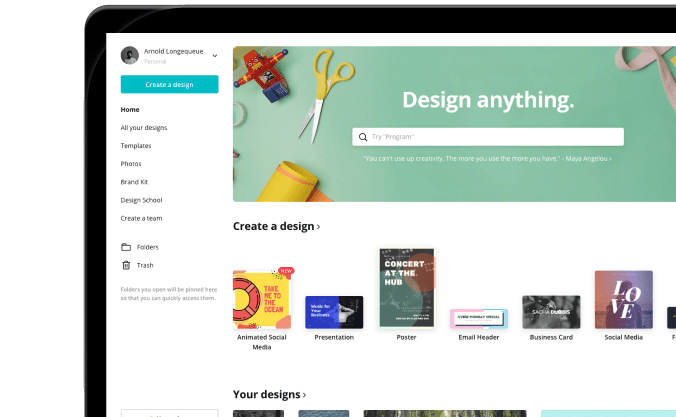
GOD BLESS THE CREATOR OF CANVA. I needed a new header because I actually could and decided to use Canva to make a new header. Canva is seriously underrated. I was able to make this new header and change up the entire colour scheme of my website in just a few minutes. Next, I decided to add a featured image for my blogs. I had to download an extension that allows me to hide my feature image in my blogs but have it show as a thumbnail for the blog menu.

Some of the feedback from the previous peer reviews spoke about how I should organize the blogs all on one page rather than clicking to go to another page like I had last time. 

I’m happy to report that the new theme has fixed even that major issue. 

The blog colour scheme is now yellow because I feel that yellow has a nice playful connotation which is what I want the website to have. It was really tricky picking the right shade of yellow because if it’s a little lighter or darker it starts to look really aggressive or pick up a dirty urine-like hue. Luckily I was able to get the right shade, I used this online colour picker tool to copy the colour hex-code from another yellow image.

Week 6: Starting from scratch

Alright so I gave in and changed the theme. It was a tough decision because I really wanted to continue with the existing theme but it is just too restricting for me.

So this new theme that I’m using called signify is making my life a bit easier as it does everything I want it to. Except change the font. For some reason I cannot figure out for the life of me how to change this font.

On another note, I’ve been trying to pay more attention to what my target audience might be and what kind of content I should be putting out. I know this isn’t the best audience but I genuinely think it’s just my friends and family. This website is sort of like a diary for me as opposed to a project I want to commodify, which is probably why the content fluctuates from what is going on in my day to what is going on in the world. 

My next steps for the website is to have a nice banner that compliments the theme, change the colour scheme to avoid clashes, and figure out a way to fix the font.

Process Post #12: Reflecting…

There are a number of things that occurred this semester that I wish I would have done differently, or I wish could have gone a different way. In reality, it’s bad to dwell on the should’ve, could’ve, would’ves that were out of my control… but I figured I would say my piece and let it go.

COVID Gloom and Blues

Since we’re in a global pandemic, I reflected on the idea that PUB 101 would have been a different course if it was taken in person. As Suzanne reiterates regularly, I would imagine that the dynamic of the class would feel more like a community of sharing ideas and blog posts. I enjoyed the relationship that was shared amongst people who talked and turned on cameras during class, but it still felt like there was something lacking. Although I do enjoy going to class and finishing work in the comforts of my home, I also miss the social interaction that comes with taking courses in person. Presenting class materials online was very hit or miss… getting hit with Internet problems is always a worry. In the future, if I end up taking PUB 201, I will take it in person. With that being said, I look forward to the day that we can all go back to SFU campus! I can relate to everyone that is feeling a loss of motivation or energy, and I hope everyone in the class is doing well with coping. Hugs all around!