Tag Archives: Process Posts

In Summation

Process Post 12

Throughout the entirety of this course, I feel as though I have been very lucky to get to work on a passion project of mine while also working towards a potential future career. I’ve enjoyed the process of getting to sit down and actually write out these posts, though it took me a while to get into the swing of things. You never really realize how much work goes into something until you actually give it a shot yourself. I certainly have a newfound appreciation for all the cooking blogs I mercilessly scrolled through in the past, wondering why they haven’t posted anything in six months. I know that I had it easy, given the fact that I’ve been posting tried and true recipes that have been handed down through my family. Even then, I wasn’t able to get something up every single week like I had wanted to at the beginning. I also think that being able to have an independent, online space for me to work through my personal musings has been incredibly helpful. I didn’t realize how much of my experience with online spaces involved being saturated with targeted content and algorithms until I took a step away from it to create a digital garden space of my own.

Furthermore, I’ve really appreciated getting to learn about each individual aspect that goes into running a website. From the ground up, how business construct their sites can make or break the reach that they might attain. Using keywords, SEO, ads, and looking up the name of your website before settling on a domain are all key parts of making sure that you’re going to be recognized based on what you actually want to represent in your work. Ads themselves are an entirely different ball game, it was incredibly interesting to see a little of the process of how ads come to be and the thought processes behind them. Additionally, I’ve gained so much more experience with running a site through WordPress, and I’m very happy to have re-familiarized myself with the tools given the fact that I will be working with them again next semester in my co-op position.

PUB 101 has been a wonderful class overall, I’ve gained a lot of valuable knowledge and insight on how to best present myself online, and represent the versions of myself I want to be visible. I really enjoyed running Considering Cardamom this semester, and while I know that it will be difficult for me to continue to run the site while in school, I wouldn’t mind having the opportunity to come back to it every now and again to pick up where I left off.

Week 12: Community Guidelines

Since, the beginning I have wanted my website to be a place where my content and online persona would basically be very true to who I am in real life. I wanted it to be a place where I can post my writing stuff without judgment and without worry. That is also the type of community I want to create. The type of community that helps each other, gives advice, gives feedback, and is just a place to be your true inner self.

Over the past couple of weeks (more like months, but let’s go with weeks) I have been creating, developing, and improving my website and my content to fully show my online persona, both my website and my creator personas, as well as look further into my audience and other key aspects of my website. Thinking about all that made me realize that I should probably create some community guidelines and figure out ways to implement them as well (even if I don’t actually have a community).

Alright, let’s do this! First things first, the community guidelines for my website. Let’s get this thing started, the community guidelines for my website are basically like any other guidelines that people with any basic human decency already follow. These basic guidelines include the usual… 

  1. Treat others how you want to be treated (I know it is cliche, but it is important)
  2. Be respectful of other people and their opinions
  3. Communicate with kindness
  4. Be polite
  5. Do not post personal information
  6. Report anything that is rude, harmful, disrespectful, etc.
  7. Be mindful of your behaviour on the website and toward others
  8. Treat everyone equally
  9. Do not share other peoples’ stuff without their permission
  10. Remember to express yourselves (in ways that do not harm others)

I personally believe that the best way to implement these (extremely basic and common) guidelines would be to obviously set an example and follow them perfectly to the very last letter. Another way to implement them would be to keep an eye out to see how my (non-existent) community interacts on my website and take action accordingly if someone were to go against the community guidelines.

I guess those are my very simple community guidelines that should be extremely easy to follow! Always remember that this website was created by a weirdo (me), so that I could finally have a place to be free to post my type of writing content and I want to keep it that way!

Sign that says good vibes only

Week 12 Process Post: Community Guidelines (for now) + Farewell (for now)

Apparently, I need to have some sort of Community Guidelines… For who? I guess Suzanne and Lauren may be thinking that I have actually gathered Dished viewers to Vancouver Gems. As previously mentioned in process post 11, I would have to actually expand myself onto other platforms.

Though hypothetically, my community guidelines would incorporate approving comments on my website. If you scroll to the footer or look to the right, it says “No comments to show.” Well, that is because I haven’t enabled them. Enabling comments would be suitable for my blog as engagement and traffic would grow.

Implementing this will hopefully not attract bots…not that it has happened before…

FAREWELL!

I guess this last process post is also a farewell, farewell to PUB 101. Is it an actual goodbye? Nope! See you in PUB 201! (if I decide I can handle next semester’s course load)

Community Guidelines & Comments – Week 12

Here are Astrometrical’s new community guidelines:

Thank you for visiting Astrometrical, on this site you are encouraged to broaden your tastes in art and contribute to the community by adding your thoughts to the collage. This site’s purpose is to inspire you as an individual and bring attention to those hard-working individuals who deserve it. Here are the following guidelines on how to best engage with the astrometrical community


Please Do:

Interact with others and voice your opinions on the blog and featured posts

Be respectful and patient with others on the site

Give constructive feedback on your experience on Astrometrical


Please don’t:

Use any form of hate speech, whether it be racism, sexism, homophobia, or any other form of discrimination

Post links  to your own pages to “self-promote” or any other forms of spam

Breach privacy of others on the site by posting personal information (doxing)


Part 2: Navigating Social Media Waters

Related to the idea of community guidelines is the social conduct of individuals online, specifically, in comment sections. This week I had the opportunity to read an article by Aubrey Hirsch (2022) where she describes the struggles she faces online as a female journalist. The article was truly shocking for me, as the whole time I was reading I could not shake the sinking feeling in my stomach. Hirsch described the misogyny, racism, and rudeness that she experiences every day simply for posting comics as a journalist. The examples she provided were truly vulgar and loathsome. However, there was one part of Hirsch’s article that was particularly horrifying for me to read, and that was when she talked about how the hate she receives online translates to attacks in the real world. Hirsch writes “Remind me to tell you the funny story about the time my internet stalker called my boyfriend’s cell phone. Remind me to tell you about the time I came home and my front door was unlocked and I spent 15 minutes standing in the rain trying to remember if I’d double-checked it before I went out “(2022). Hirsch also talks about a time when strangers came to her house and launched dinner plates at her. Personally, I know if I was faced with that kind of pressure and that level of threat on a daily basis, I would constantly be in a state of paranoia. 

The examples that Hirsch provided reminded me of some other examples of threats in the online world being pursued in real life. One that I had just seen recently was a case of swatting. For those who don’t know, swatting is when someone on the internet finds your address, and calls the local police saying that there is a severe crime (ex, hostage situation) occurring at your address. The swat team then arrives at your house and many times this situation arrives in disaster, as an innocent person is killed or injured. Adin Ross, a streamer that I used to watch was recently swatted. Since he was live at that time, you can see the fear in his eyes as he begs his viewers not to swat people. 

To someone who is not internet famous like myself, I am always in shock when I hear stories of individuals with malicious intent trying to harm someone online. Hirsch has done a wonderful job illustrating the importance of moderation and regulations against hate speech and reminding me of the pressures those who make their livelihood online face. Moving forward as a community, I think we should show more support for our favorite online creators and each do our part by reporting the threats and hate speech we see online. 


The post Community Guidelines & Comments – Week 12 first appeared on Astrometrics.

Process Post #11: Transmedia Integration

This process post was intended for Week 12, November 29, 2022.

Am I doing this transmedia integration stuff right? I do have two social media accounts as an extension of my current website. So I think I am on the right track? According to the blog, “Pokemon as Transmedia Storytelling” from Kevinbrittenylauren.wordpress.com (2013) with words from Henry Jenkins, “Transmedia storytelling is a process. Elements of a fiction get dispersed across multiple media for the purpose of creating a coordinated entertainment experience” (Jenkins, 2009). While transmedia integration does not directly mean social media integration—that’s the way I’m going to interpret it for this process post.

After reading the Pokemon blog, I had a good idea of what transmedia integration was— simply put, it is creating something that can be translated across different forms of media such as magazines, movies, tv shows or even a video game—these were things I knew weren’t really possible for my TessDrives site. Something that is possible for the website is the social media aspect of it. Currently my website translates across two different social media sites, YouTube and TikTok. In a way, you could say I’m on the right track?

My YouTube channel currently has a total of 1,327 views and my TikTok currently has a total of 1093 views. These are some pretty impressive numbers given the amount of subscribers and followers I have across both platforms. If I have to be honest, I did start my YouTube channel much before this Pub 101 class started but the TikTok account was actually created during the first week of class—so I am definitely impressed with the latter.

If this class were to extend longer, I would definitely work on establishing TessDrives as a recognizable username that translates across all social media platforms. Those who prefer longer educational videos would turn to YouTube, those who prefer shorter videos would go to TikTok, and those who prefer looking at photos of my Tesla would go to Instagram. I believe this would be an effective way to capture a larger audience with different types of preferences.

Featured photo from: B. Tenderich (2015). Transmedia Branding vs. Integrated Marketing: What’s the Difference? LinkedIn. Retrieved from: https://www.linkedin.com/pulse/transmedia-branding-vs-integrated-marketing-whats-burghardt-tenderich

References:

POKEMON AS TRANSMEDIA STORYTELLING (2013). Retrieved from: https://kevinbrittenylauren.wordpress.com/2013/11/21/pokemon-as-transmedia-storytelling/

Positive & Safe Community Environment

After watching many tutorial videos, continuous editing, and questioning my entire life, I applied all of the feedback Lauren has given me to Reading with Rachel. Will I ever be 100% satisfied with my work? Probably not. However, I am happy with all of the progress I have made this entire semester. I finally finished editing my contact page, linked my Twitter account, updated my favicon, and installed my website accessibility plugin. Hence, applying the feedback I received makes me feel happy and satisfied. As someone who wants to become a future teacher, I have learned through my volunteer experience and education courses that community guidelines are an excellent method to ensure everyone is being courteous towards other people. Moreover, community guidelines enable individuals to be on the same page and what is expected and required of everyone. After reading Margaret Atwood’s article, “Your Feelings Are No Excuse,” she makes an important point on how “the most important meaning of freedom of expression is not that you can say anything you like without any consequences” (Atwood, 2022, p. 1). Atwood implies the importance of being respectful when sharing your thoughts and opinions on social media. Atwood’s point is significant to keep in mind, especially on social media or opening comments up for my audience to interact with one another on my website. Here is a list of my community guidelines:

  1. Be kind and mindful of what you say. 
  2. Respect others and their opinions even if you disagree with them. 
  3. Please ensure you are protecting your privacy and personal information, as well as others. 
  4. Bullying, trolling, and spamming are not tolerated. 
  5. Have fun, get out of your comfort zone, and have an open mind to learn.

These community guidelines are significant because they ensure everyone is respectful towards other opinions and perspectives by creating a safe and positive environment. I want to potentially implement these guidelines on my website as a separate page to remind and emphasize the importance of reviewing these guidelines. I am unsure if it would be appropriate to put the community guidelines on my homepage. I think it would be a good idea because that is the first page users will see and one of the first elements of my website they will see.

References

Atwood, M. (2022, April 1). Your feelings are no excuse. The Atlantic. Retrieved December 3, 2022, from https://www.theatlantic.com/books/archive/2022/04/margaret-atwood-hitchens-prize-speech/629443/

We’re All Human Too

In the discussion about community guidelines for this week’s Process Post, I have not only been reflecting about what this means for those in the public who want to contribute to the project’s content, but what about the people of PROJECT: Offline themselves and what they express with each interview.

From reading “The dark side of Guardian comments” by various writers from The Guardian, after seeing the animated visualization as you scroll through the article, I was pretty shocked to see the ratio of blocked comments when it came to the comparison of articles that were written by men and those that women wrote.

Currently on the PROJECT: Offline site, with each post shared, the commenting feature has been turned off. Initially, this was a design choice when creating the website, as I wanted to direct readers further into looking at other content once they had finished reading. However, after reading through “The Psychology of Online Comments” by Maria Konnikova, when they discuss the idea of the “shared reality” of how those can share their thoughts, feelings and experience after reading or doing a performed action, as they also mentioned in the article, from the removal of comments allowed on my blog posts, I feel that this element is taken away. There is an attribute where I want the public to have the option of being active in the conversation by sharing their story after reading about someone else’s as I think this can build on the conversation from the topic discussed.

However, after reading through “That’s How It Works When You’re a Woman on the Internet” by Aubrey Hirsch and seeing multiple examples of some terrible things written regarding her content, as the content I share is not directly to my own thoughts and opinions, I feel that I also hold the responsibility to protect those that have decided to take part in this project; not only I am human reading these comments, but they are human too and they might react differently towards a particular comment. Since the content of my blog is very open-ended, although I can also regulate what is being published from the interview and what is said by that particular person, there is also an element where I feel that I am restricting ideas of someone’s speech; and I feel that takes away from the intention of this project of having the freedom of expression. Therefore to create balance with what can be shared from either party, a community guidelines page is most likely necessary for the future if I continue this project further.

In creating a community guidelines page, I want to highlight that this project is a place that is respectful and non-judgmental; more importantly, we are a listener first before being a speaker. As this project is focused on learning about other people, we have to be open-minded if there are any sensitive topics discussed. Although people are open to discussing their views and opinions, anything derogatory will not be tolerated.

To allow visitors to view these guidelines, I would implement this as another page onto the side in the navigation bar; since there is no footer in the design of my website, although I could add one, the desktop design of having the navigation static on the page would only make the link to the community guidelines page lost at the bottom of each post. If this is a feature I can also implement within WordPress, I would also get comment contributors to toggle that they have read the community guidelines first before contributing further.

In the implementation of placing community guidelines onto PROJECT: Offline, I think only then I would feel comfortable in turning on the comments again. To further grow this community that I’ve now built, creating community guidelines will help unite myself, the interviewees and the visitors in what we would like to share with the world…

I’m Not Built To Be A Keyboard Warrior

This week in Posiel, we discussed the idea of comment sections, and the different motivations people may have for commenting.  This can range from being an expert on a topic and wanting to share your knowledge, to someone who thinks they know what’s going on and wants to help, but really has no clue, all...

week 12.

Welcome to Day in the Life of Sofia community!

This space is for everyone to find new interests or places to check out. Allowing to hear about other people’s opinions, sharing feedback, and other things we should check out.

The core values of our community is positivity, respectful, and thoughtful language.

  • Positivity. We encourage positivity in our relationships with one another, establishing a setting where individuals may go to be inspired and encouraged.
  • Respectful. We are treating one another with respect and kindness. Although we are aware that not everyone will share our opinions on everything, having a range of opinions and viewpoints is advantageous. If we are being respectful of one another, everyone in our community deserves to express their own opinions.  
  • Thoughtful Language. We are considering how others may interpret our words and tone. We are aware that internet writing can be readily misconstrued. When leaving comments on blogs or expressing disagreement with locations, we encourage everyone to be nice and use appropriate language. Day in the Life of Sofia should have a friendly atmosphere.

To meet the collective goals of our community, it’s important that all members feel safe and supported. To help everyone have the best possible experience, please take a look at our community guidelines:

Positive guidelines 

  • Introduce yourself to the group
  • Feel free to post questions and start discussions on any topics relating to anything food or adventurous.
  • Treat others as you would treat them in real life
  • Be polite and communicate with respect
  • Respect the privacy of other community members
  • Utilize mentors and community managers for support
  • Contact us directly with feedback on our Instagram, @Dayinthelifeofsofia.

Rules and restrictions

  • Don’t share personal or private information
  • Don’t post irrelevant messages
  • Don’t post promotional content
  • Personal attacks, trolling and abuse will not be tolerated
  • Don’t post explicit, rude, or aggressive content

Consequences

In the event of someone violating these guidelines, we will take action to protect other members of the group. This might include a warning or in the event of extreme or repeat behavior, the member may be banned from the community. 

If you experience or witness any behavior that doesn’t follow our community guidelines, please contact us directly on Instagram. All reports are kept confidential.

Conversations with the Age Gap and Transmedia Offline

It’s now the end of November; which means the holidays are fast approaching with families beginning to put up their Christmas trees, people going to the mall to get their Christmas shopping done and Mariah Carey beginning to take over pop radio. I was invited to a work Christmas party last week to attend to this past weekend. A part of me just wanted to stay home, but from sitting at my desk for over 3 days and continuously working on schoolwork, I figured that this would be a good time for me to get out of the house and just escape the realities of life for the night.

The party was mostly of guests that were quite older than me and outside of my age demographic. Luckily I already knew the majority of the guests, but sometimes I find the age gap can be a bit awkward as finding topics for discussion that interests both parties can be quite different; most of the guests are married with children and are quite established in their careers, whereas I am still a young adult student still living at home. Instead, I turned this around into an opportunity where I could network and perhaps just get to know people more on a personal level; similar to what I am already doing with this project.

I think one of my favourite questions that I asked a couple of people during the night was, “what did you decide to do after high school?”, as everyone has a different journey to land the career they did. Some went to post-secondary, some dropped out and some simply chose to pursue something else. In a way, I think their stories will help me gain perspective on how I’m going to direct my life through my 20s and give me direction on what I should do next with my life. As I am approaching the end of my degree within the next few semesters, life is starting to become a question mark once again with another chapter closing and a new one beginning; but I’ve realized that I’m also not alone in feeling this way and some talked about how they felt like they need some change in their life as well as they approach their 50s.

Regarding this week’s process post on transmedia integration, I think the channels that are chosen depend on one’s public and what interests that particular demographic on that platform; quick content or sitting down for a read? I think something such as taking snippets of each of my interviews and making a remix (similar to my video assignment) would work well on a platform such as TikTok/YouTube Shorts/Instagram stories, as this is quick content one can watch and it could transform into sort of like a spin-off to what is already discussed in the interviews; sort of like how YouTuber Thoraya Maronesy does on her social channels:

But to post the entire interview write-up as a post would not be appropriate on Facebook or Instagram. Even though Instagram is visual and media heavy, because my content is more in-depth and not just visuals, I think that viewers on these channels would be quicker at turning away to read the content. These platforms instead could be a place to bait people to read more and re-direct them to the website, in addition to Twitter with a catchy tagline to gain reader interest. On platforms such as Tumblr and Reddit, I’m curious if these platforms would work to share more lengthy transcribed segments, as I find these channels are more text-heavy with posts shared. Perhaps this is something I could integrate in the future…

From an offline perspective, a format such as a book, magazine or zine I think would work well. This could act as more of a coffee table book, where one can pick up and almost be like reading various short stories. As my visuals also add an element to this project, I think that the tactility can also make it more like a photo book. The book “Humans of New York” by Brandon Stanton was a big inspiration for this project. Although I haven’t read the book in the entirety myself, after conducting this project and having done multiple interviews now, I am so much more intrigued to read his work on a medium different from how I’ve done it. Perhaps one day I could transform my project into a book, I think this could also help take out the irony of how “offline” is still being shared online on this website; but perhaps what it this project was offline altogether…

Regarding Various Channels and Media

In this post, I explore how to choose a medium for your message and the importance of using channels to distribute your message to your audience.


Choosing Your Medium

“Types of media”

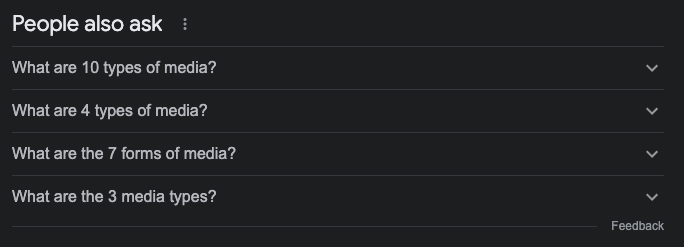
Upon googling “types of media”, you will discover that definitions and descriptions of types of media that exist in the world vary significantly from source to source.

Just look at this section that was the second item to show up on my google search:

Google search results depicting text that says

People also ask
What are 10 types of media?
What are 4 types of media?
What are the 7 forms of media?
What are the 3 media types?

After reviewing the various types described in these search results, I realized that boxing and organizing types is unnecessary.

Media, after all, is just the plural form of the noun medium which Oxford Languages defines as “an agency or means of doing something.”

After all,

The medium is the message

Marshall McCluhan

In other words, you must craft your own form of media to communicate your message.

Crafting Your Own Form of Media

To craft your own form of media, I recommend you examine three elements, the message itself, yourself as the messenger, and your audience as the recipient.

To review these elements ask questions such as:

  • In what ways could I share this message?
  • How does this message want to be shared?
  • What is the broader purpose of this message I am sending?
  • How have others previously communicated a message like this? Could they have done it better?
  • Are there conventions for messages such as this? Are they ideal?
  • How can I make this message uniquely my own?
  • If I could do anything to share this message how would I share it?
  • What am I capable of doing to communicate this message?
  • How can I compromise between my own ability and my ideal for sending this message?
  • How does the audience want to receive this message?
  • What do I want the audience to do upon receiving this message?
  • How is the audience capable of receiving this message?

After asking questions like these (note that you are most certainly not limited to these or required to answer all of these), choose your medium. Then take action to craft it.

Selecting Channels

What a Channel Is

When I hear the term “channels”, I immediately think of television channels. Although those are most certainly types of channels, the type of channels we are looking at here is broader.

Here, we are going to define channels as paths that we can use to enable our content to reach our audience.

Channels themselves are too media, however, they are different than the form of media described above in that we are going to be using them to direct our audience to our message, whereas previously we were using our medium to direct our message to our audience.

The purpose of channels is reaching our audience so they can connect with our message.

Choosing Channels

To choose channels, we need to answer the question “what is the best way to get our audience to reach our content?”

Sometimes, the best channel is by talking directly to people and asking them to interact with our content. Other times it is best to simply let the content exist and be found by others.

Channels again come down to the sender, the receiver, and the message. Examining these three elements will allow you to choose the best channel for your content.

Media and Channels

To choose your form of media and your form of channel, you need to examine the sender, the audience, and the message.

In examining these items, you will discover a distinct medium you need to create to embody your message and channels you can use to spread your message to your audience.

Communication is an art form. Practicing and iterating on messaging is the best way to improve.

References

McCluhan, M. (1964). The medium is the message. https://web.mit.edu/allanmc/www/mcluhan.mediummessage.pdf

Comments, Questions and Concerns

The concept of a comment section on the Internet is generally a scary and overwhelming place and for good reason. The more that we have been allowed free rein of anonymity on the Internet, the more and more people start to feel free to express some of the more controversial and hateful opinions that they harbour with little empathy for others, as is seen particularly with articles and content created by women. Aubrey Hirsch in particular writes about her experiences in receiving online vitriol for content that she has created, and the ferocity that was in some of those comments was quite honestly horrifying. I knew in my brain that those types of things were being said on the internet, but to see the real screenshots of what people have to say when they are given the appropriate environment was jarring at best.

When I was designing Considering Cardamom, the template I picked out for my site had comments automatically built into the post formats. Initially, that was something of a turn-off for me. The last thing that I wanted was to have to potentially deal with disrespectful comments or people criticizing my content. Furthermore, reading more and more about the backlash that women experience when writing articles was overwhelming even just to think about. I’m not a professional journalist, I am not writing this blog intending to reach the masses and educate them about my opinion. The posts I write are for personal reasons, whether those are for internal reflection or just to have a record of some of the recipes that I’ve learned from my family.

Ultimately, I did decide to leave the comment sections open. Logically, it makes little sense that there would be a large amount of political debate or harassment within my comment sections given the content of my blog. I highly doubt that people are going to be sending me death threats or sexual harassment over my chai recipe. The context of a site is so important to consider, and it put my worries at ease to realize I wasn’t going to be linking my real full name to any highly controversial content. Additionally, while checking out other recipe blogs that I have used in the past, one thing I noted was that most of them had open comment sections. Most of them that had significant activity allowed users who made the recipes to offer suggestions and personal anecdotes that could facilitate new users’ experiences while cooking. I wanted to provide that possibility for a community and figured that I would handle any unrelated comments as they arose.

Works Cited

Becky Gardiner, Mahana Mansfield, Ian Anderson, Josh Holder, Daan Louter and Monica Ulmanu. 2016. “The dark side of Guardian comments“

Hirsch, Aubrey. 2022. “That’s How it Works When You’re a Woman on the Internet“

(Process Post #11) Multimedia Integration

This week (November 22–November 29), we got our second review feedback from our TA. Thank you, Lauren, for giving out such a detailed review to help me out with building my online presence. I will be incorporating this feedback into my website this coming week. Apart from that, in class, we discussed the importance of being present in multiple places, whether it be social media, a website, YouTube, etc., in order to reach a diverse and larger audience.

My website is focused on meditation and mental health, and there is no doubt as to why I should educate about this type of content on social media platforms (like Facebook and Instagram) as well. There are several reasons to be present on social media and on my website.

1. Brand Presence

In order to build trust amongst the audience, it is important to be everywhere. People who connect with my content on social media are more likely to visit my website.

2. Ease Of Use

Most of us are familiar with using social media. It is there with us wherever we go (on our phones). Furthermore, the shareability feature provided by social media is by far the best of any content medium. As a result, I can create a post or story on social media with a “read more” link to my website; this will help me divert more audience from social media to regularly check up on my content on the website.

3. Audience Insights

Many social media platforms like Instagram offer data insights on their business accounts; this data ranges from demographics, the time of day with the most interactions, etc. Hence, this can come in handy, as more people are on social media than on a website. This data would be more diverse and have greater numbers than Google Analytics due to the number of users on social media. Hence, this data can be a valuable tool for me to apply to my content on any platform.

4. Share Positivity In A Negative Environment

As I have talked about in the essay as well as in one of the blogs on my website, social media is biassed and a negative environment for many of us. However, it is crucial to be present on social media and share positive teachings in a negative environment.

As a result, social media (particularly Instagram and Facebook, due to its large user base), are an excellent way to reach a large number of people. Furthermore, I may be incorrect about who my intended audience is; for example, if I start a social media page and discover that a wide range of people enjoy this type of content, I should probably give it a try!

The post (Process Post #11) Multimedia Integration first appeared on Self Therapy.

Week 11: Incorporating Transmedia

I believe it is important to incorporate and integrate transmedia into whatever you are posting and where ever you are posting stuff. This can be done over any different combinations of media whether that be video games, blog posts, movies, TV shows, radio, or advertisements.

The best way for a website owner like myself to incorporate transmedia would be to use different social media platforms like Facebook, Instagram, and Twitter. I plan to use social media platforms like the ones I just listed because I already know how to use them, I am familiar with working the platforms, and it would be fairly easy for me to establish an online presence as Midnight Stories and as AKC.

The most logical approach according to me for me would be to post mini segments of my posts to my social media platforms and link my website because that would give my audience a general feel of my content and if they are interested, then they could visit my website through the link in my profile. Another thing that I could do is ask my audience on those social media platforms what type of content they prefer me to post about as well as what they would like to see more on my website and maybe have some polls about what I should write about for my next post.

I would mainly focus on Instagram because more people use Instagram rather than FaceBook to get their information and inspiration as well as find accounts that contain stuff that they find interesting and endearing. The reason that Twitter would not be my main social media platform is because currently, it seems like Twitter is going through a rough patch and the focus is mostly on that rather than other things like stuff that is happening in the world.

In the end, I think Instagram would be my best bet to grow my audience as well as get my website and online persona out into the world, but the more the merrier, so I would also be posting on FaceBook and Twitter to get more traffic to my website.

Different app icons

Stretching Across Media

For the next while I’m going to focus on Instagram to integrate transmedia storytelling into the website. At the beginning I think I stretched a little too thin starting a few other connected profiles, and Instagram is the most fitting channel for me to focus on right now.

On Instagram, I’d like to shadow what I post on this blog, but in smaller pieces, so people can see what I’m working on without having to check around a bunch of different forms of media to find different content. One unique aspect of Instagram is that I’ll be able to share little bits from a project I’m working on or something I’m researching, before I write the full post.

I’m looking forward to getting a lot more time to knit over the break. I’d like to try to make another YouTube video for my next project. I have an idea in mind, inspired by Roxanne Richardson, that has to do with socks and time. I’m not entirely sure how it will work yet, and I’ll have to do some yarn shopping, but I’m excited to create more of a narrative within the blog and social media channels. I’ve just been publishing content surrounding knitting and a couple of other hobbies, but I really want to narrow down because it’s tricky to keep coming up with things to talk about within such a general topic. At first, I was considering a blog focused on the how-tos of knitting alongside my own progress in the craft, but if I’m honest with myself, I’m not great at explaining things. I learned what I know through a mix of other knitters’ explanations and trial and error, and because I’m really not an expert I’d rather leave the teaching to experienced knitters.

What I do enjoy is history. Not the kind of history where you study all the bad things and wars, though that is important and I like a bit of that. What I really like to learn about is how people used to live, day to day, how they ate and slept and dressed and filled their time. There’s a few historical dress experts and historical knitters that I’ll list in another post who convinced me that not all history is trying and failing to remember which day/month/year a very important event happened.

Personal projects take a lot of time. I’ll always think there’s something that can be better, or an avenue I’d like to go down that contradicts my earlier focus. I’m not going to rush it, and I’m going to give myself license to do silly things and imperfect posts and spend a few weeks obsessing over something, make myself tired of it, and never mention it again.

Transmedia Integration: Book Recommendations on Twitter?

After the second round of feedback I received from Lauren, many changes must be made to my website. First, I need to create a contact page and link my website to social media platforms, which ties into transmedia integration on my online publication. This suggestion will be one of my goals for this week. I plan to create a Twitter account to spread and bring more awareness of my content to a larger audience. I want to include the link to my Twitter account in the “contact me” page, which I am also creating this week. Transmedia integration is significant because it “does not simply disperse information” (Kevinbrittenylauren.wordpress.com., 2013, p. 1) but gives readers a more engaging platform to read and interact with the content. In other words, transmedia integration promotes variety. When I create a Twitter account, I think it will allow my users to see a more personal side of me as a website creator and my content in general. For example, Twitter enables me to post content that is not always going to be featured on my website because tweets do not involve as much editing and review. In other words, Twitter gives me more “freedom” to interact with my audience. I could potentially make an Instagram account as well since it is one of the most popular social media platforms. However, Twitter’s use of hashtags would benefit my online publication because of the large reading community on Twitter that interacts and engages with book recommendations through tweets. I will also be activating my website accessibility plugin and updating my favicon.

References

Kevinbrittenylauren.wordpress.com. (2013, November 21). Pokemon as transmedia storytelling. kevinbrittenylauren.wordpress.com. Retrieved November 27, 2022, from https://kevinbrittenylauren.wordpress.com/2013/11/21/pokemon-as-transmedia-storytelling/

week 11.

My Instagram page, @dayinthelifeofsofia, was recently created. I’ve recently begun posting a lot of pictures of the locations and eateries I’ve visited. I wanted to utilize Instagram to capture my experiences while also helping others discover exciting things to do in Vancouver. Although there are websites where you may locate entertaining things to do, it might be challenging in some places. Although Vancouver is a large city, if I’m on Broadway I want restaurants and parks close by, not in Kitsilano.

That is the real reason I made this account. I want to document my life by sharing more and seeing if I can grow an audience with it. I have always wanted to make an influencer account, but I couldn’t keep up with the demand of posting continuously. I have been trying to post more to gain more transmedia presence. It will grow a better community of people to share similar interests.

Instagram will be a meaningful way to engage through real life content. I can post more on Pinterest to really grow my community and engage people to be interested. I can come up with ways to implement transmedia integration with how I see fit with what I am sharing. Social media influencers most of the time try to work their way towards YouTube. I could head that way once I have a bigger community of people that are interested about what I am pursing.

Peer Review 3.

This week I’ll be reviewing Mikeala’s website, http://mikaelatallaiac.ca/. My first impression of her website was how appealing it was because of the colour scheme. I am a huge fan of how the pink and brown work together. I found that it all worked well together, it was like BAM in my face. It was neat and tidy which I liked plus the photo of herself on the home page allowed me to know who she was. It really brought in more engagement for me to learn more about her and about her health blog.

I really like that she included a “recent post” column on the side to check out her posts that she has made. She has also included her twitter to check out which I found nice. She has been publishing things about health, but not the typical health and wellness things.

I would have really enjoyed more about the type of things she would do to help ease her physical, mental, and social health. It would be intriguing to gather more information on how other people regulate or help their own health.

Another thing I would really like is photos. I am a huge visually learner that is why having photos on her post would really connect me to click on a post.

I feel like Mikeala’s website could really cultivate a good audience if she were to market it up. Basu (2020) said “a growing movement of people are… creating sites that are more collage like and artsy”. I get that vibe from her website. She is bringing in that aspect into her blog which I find appealing.

Basu (2020) said “everyone does their own weird thing” I agree especially in your own digital life, we do. I feel like Mikeala is focusing on personal development and growth, I feel like she should talk more about her own growth and development. Many people nowadays like to listen to people’s stories, how they overcame struggles. Everyone has their own weird habits or struggles that they are trying to overcome.

I know many people grow a huge audience with gym Instagram’s. What they eat, calorie deficits, and workouts they do. But Mikeale’s view is to learn about the best practices in our 4 components of health which is different but appealing. I want to learn about healthy ways of achieving things whether it be physical, emotional, social, or intellectually. She really could grow a strong community of people that are also willing to learn about these things. She could start off with starting an Instagram or Tik Tok to really market what she is learning in those classes. Many people would be interested to learn how to heal things in their own health.

Mikeala’s website could really receive high engagement if she focuses on showing new techniques while also showing her own lessons she learns.

I really did find a lot of her posts to be very beneficial. She wrote a post about journaling. She continues to learn new ways of dealing with your own health, in successful ways. Mental health has been something I have struggled with over the past few years. Anxiety. That was a weird time for me, but I have journaled my life away to help ease my brain. I find that her adding ways to deal with mental health is amazing.

I am still learning new tricks and techniques that will help me grow as an individual. I will be coming back to check out her other advice. I am intrigued with some of her posts. Sometimes most things I find that really focus on health is a lot of physically. I hope to see some of the things she is advising for her to try out and document it.

Overall, I like her blog and will be coming back for sure.

Basu, T. (2020, September 3). Digital gardens let you cultivate your own little bit of the internet. Technology review. https://www.technologyreview.com/2020/09/03/1007716/digital-gardens-let-you-cultivate-your-own-little-bit-of-the-internet/ 

Regarding Generosity & Content Marketing

Regarding Generosity & Content Marketing

Last week, a class I am in, Publication of Self In Everyday Life, had a guest speaker named Steve Pratt. 

Steve has an extensive history in the publishing field, He most notably founded a company called Pacific Content which was recently acquired by the Canadian telecommunications giant Rogers. He is now moving on to develop his own consultancy for creatives titled The Creativity Business.

During class, Steve did a presentation where he provided an overview of what it takes to build a creative-based business. 

After viewing Steve’s presentation two particular points stuck with me:

  • Generosity is critical to making the world a better place
  • Content marketing is perhaps the best way to build your own brand

Why Generosity is Critical

In my own life, I have traditionally defined virtuous acts as acts which are good for the sake of good. 

In viewing Steve’s presentation I realized demonstrating generosity by taking generous action, is perhaps the purest form of a virtuous act. 

Steve described generosity as giving, without expecting anything back in return. A definition that aligns with my own definition of virtue. 

If we all gave without expecting anything in return the world would most certainly be a better place. If we all thought a little bit more about being generous, perhaps more hardship could be overcome and more social problems around the glove could be solved.

The trait of generosity is now one I know I will embody moving forward.

The Power of Content Marketing

When Steve was presenting, he talked about many of the amazing brands such as Apple, Slack, Spotify, and more that he got to work with as a part of Pacific Content. The whole time I was incredibly curious as to how Pacific Content was able to acquire these pretentious clients, so as soon as I got the chance to ask I did.

Steve’s reply was simple and something along the lines of “we made content.”

Steve explained that simply having content on the internet that showed Pacific Content knew what they were doing when it came to podcasts led to these companies approaching them.

The irony is that the content explained how to do what their business did. They explained how to do they job they could provide, yet people paid them to do the job anyways. 

To me, this seemed backward. I had believed if you have a secret formula, you typically do not want to let others know what that secret formula is. 

What I now know, is that no, you are not only telling others how to do your job, you are showing that you know what you are talking about.

The content marketing created by Pacific Content was incredibly powerful, because clients realized they could help them create great content because of the evidence that Pacific Content provided with their content marketing.

Conclusion

Generosity and content marketing. Two simple concepts are incredibly powerful. 

Two concepts, that will make my life and the world a little better.

Process Post #10: Updates to Tess Drives Website

I have made some notable adjustments to my website ahead of both the peer review and second round of feedback from our TA Lauren. I added a recent posts section to my homepage, updated the featured posts section and have done some initial alt text adjustments to the photos across the website.

It took me a while to figure out how to put a recent posts section onto my homepage. Since my homepage runs on Elementor, it was only possible to add in a recent posts section if I had Elementor Pro—which I was definitely not paying for. I could have used some html coding but I have never took a comp-sci course in my life so I was also not going to go down that route. Instead, I was able to add a recent posts section from the WordPress side and that fit the glove perfectly! I was able to display both my public posts and my Pub 101 posts that have dates to clearly show when they were posted. I feel like Lauren would definitely appreciate this when she’s grading my work…

For my featured posts page, I looked to Lauren’s feedback from round one and she told me it would be nice to have the titles of the posts under the featured posts photos. Initially, I did it that way because I was struggling to add text under the images, but through some careful trial and error, I was able to figure it out! And I have to say, it looks much clearer now as to which image belongs to which Tess Drives post. I also updated the three posts to reflect more current posts that my viewers may be interested in. The difference between recent posts and featured posts is that the recent posts are chronologically ordered from oldest to newest and featured posts are random posts to catch the attention of readers.

Last but not least, I had some free time to add some alt text to most of my images on my website. It was a pretty simple process, I just had to go into WordPress and go to my media library and individually choose the photos to add alt text. I found it odd that on the public facing side of things, you can’t actually view the alt text without using the “inspect” function. I guess I was expecting something similar to Twitter’s alt text where you can click into the “ALT” badge and view the alt text from there. I like this touch, I am going to see if there’s a plugin I can install to my website to have alt text show like that.

Peer Review #3: Stephanie Gorwill (swagfashionblog)

Link to website: https://swagfashionblog.weebly.com/

Design

What works well

Upon landing on the homepage of the website, it was interesting to see that Stephanie chose Weebly to design her website instead of WordPress. I like this ambitious move as it shows that she is courageous enough to step away from the status quo and make her website stand out more.

Stephanie does a really great job setting the scene for her website viewers, she has “Fashion & Lifestyle” in large white text and a Louis Vuitton monogram background as contrast. It is extremely clear what the website will be about just based off a few seconds on the homepage.

I love how minimal her menu bar is and it has only the important tabs needed such as “Home,” “About,” “Public Content,” and “Pub 101” with a drop-down menu for Public Content and Pub 101. It makes it super easy to identify and navigate through the website.

Lastly, on her “About” page, I love how it has a “collage-style” aesthetic showcasing her personal photos, a biography, and her social handles.

What needs some improvement

I noticed on her website she had two buttons that were not linked to pages correctly. The first one being the “read more” button on her homepage and the second one being the “Pub 101” tab on the menu bar. I would suggest her to go back and properly link these pages as it is common for users to expect these to be functional buttons

Although I did like the use of the Louis Vuitton background, I would suggest Stephanie to use a higher quality photo. It is evident that the image has not been optimized for the website and it is quite distracting visually since it is the background for all her pages and content on the website.

Lastly, I would change the logo/website name on the top left corner from Stephanie Gorwill to the actual name of her website (supposedly SwagFashionBlog?) as it is confusing whether the website is a personal blog or a fashion blog.

Content

What works well

Going into her public content, it is great to see that my initial impressions of a fashion blog is carried over to her content, it is exactly what users like me expected.

Stephanie has gone with the approach of choosing fashion items that she has personally purchased and giving her overall review of the item. She does a great job with this by even comparing the items to similar products like she did with her blog post called “The Aritzia Super Puff” where she compared this product to a similar product offered by Canada Goose.

It was also great to see that Stephanie reviewed some products that were unisex such as the Artizia Superpuff and the Nike Mercurial Superfly 6 Elite AG-PRO Fast AF – ‘Total Orange/Black/Volt’ (wow that’s a mouth full! haha).

What needs some improvement

One of the main aspects Stephanie can focus on is perhaps making her blog posts a little longer. I noticed that each blog post was only around 200 words. As a reader who is interested in the content, it was a little disappointing when I reached the end as I had so many questions that Stephanie probably could have addressed if she wrote more!

While this sound knit picky or outright annoying, I did find one typo in Stephanie’s website in her blog post called “Coach Mini Charlie Backpack in Pebble Leather Black” specifically the line “If you’re on the market looking to purchase a mini backpack…” This probably should be changed to “in” rather than “on.”

Marketability to Intended Audience

What works well

As mentioned earlier, I love how the theme of fashion is clearly portrayed to the audience and is consistent across both her design elements and content. As a person who is into both streetwear and luxury goods, it is great that Stephanie does not limit her audience by only producing content to one specific gender or one specific fashion category. This will allow her to gain more traffic on her website.

What needs some improvement

While Stephanie does a great job of listing her social media handles in her “About” page, it would have been nice if she was able to link her profiles to each handle. In addition, it seems like she has given her personal Instagram and Facebook profiles as her Instagram is on private and the Facebook profile requires you to add her as a friend. I believe these should be listed under a “contact us” page rather than the social media handles as these two platforms do not relate to her fashion content.

The Last Twitter User Standing

This week in POSIEL, we examined the idea of bringing our blog content to other social media platforms, including YouTube, Instagram, Facebook, Reddit, Snapchat, TikTok, and yes, even Twitter. And after some consideration, I decided that I will be utilizing Twitter, as a secondary platform for my content! Now I know what you’re probably thinking:...