Tag Archives: blog
PANTONE 13-1513


Coca Mocha
Knowing When to Leave
Dear reader,
The content below discusses implied self-harm.
One of the most challenging things I’ve done is recognizing when a relationship isn’t working and knowing when to leave. I want to talk about some of the experiences I’ve had when I know that a relationship is bad for me, and how I came to that conclusion.

Growing up, I didn’t have a lot of conversations about bad friendships or relationships and what they would look like. The idea I had of any toxic relationships was very black and white: the other person would appear to be an obvious villain, and I would just know when to leave. In reality, my relationships have been much more nuanced. The longer I’ve known someone, the more I can justify their presence in my life. Of course, when a person has hurt me or hurt my boundaries, the justification applied nonetheless.
This was the case with a friend in high school. I remember back then, I had very little sense of how to set my emotional boundaries. I would let them unabashedly tell me their feelings and their traumas at any time. I thought this was a good thing, but increasingly, these feelings held a lot of weight. I was proud that they trusted me so much to let me see them as their most vulnerable self. But I also felt solely responsible for their well-being. I would place their mental health before mine. I would lose sleep over wondering if they would hurt themselves.

Gradually, I began to feel like I needed space and would tell them this. I would say I was taking a break from social media while checking my messages to see if they hadn’t dropped massive texts venting to me. Although they would give me space, they would make me feel guilty about needing it. And more importantly, they didn’t listen to me. When I would try to tell them about my feelings and how one-sided our relationship was, they would make me feel like they understood by writing me grand letters of appreciation. I stayed because I knew their feelings were genuine.
I wish I could tell myself then that you could care about someone and still hurt them.
I saw these posts about gaslighting on Tumblr and I began to scroll through them. I remember thinking that I didn’t want to relate to them because my relationship was surely not that bad. But this person had consistently undermined my feelings and made me feel as though I had misremembered an interaction, which are key signs of gaslighting. Their apologies were empty. Emotionally, I felt like I had a lot of highs and lows with them. I realized that I was dreading every interaction with this person.
I knew it was time to end it.
For me, this meant cutting all contact and writing a long letter to them explaining fully why they had hurt me and why I was leaving. I felt like I had to justify my feelings to them because of how close we had been. I didn’t give them any way to respond. Afterward, I spoke with some friends about what happened. I felt so immensely guilty about doing this that I physically felt sick. My friends supported me, and listened to me. Their support comparably cemented my thoughts that I hadn’t been listened to.
What I’ve learned from this experience and similar experiences is this: all involved parties in a relationship should feel, relatively, like they are sharing the same emotional weight with each other, and that they can rely on each other. One person shouldn’t be relying on another person to put out their fires exclusively, though there may be times when they’ll need more support. In my relationships, my factors for when to leave have been these two things: are they willing to recognize when they’ve hurt me? Are they trying to change? I’ve asked myself if I’ve just stayed in a relationship because it was easier to not rock my social circle with ending the relationship than to leave. If your justification is more about other people than your ability to enjoy your relationship, leaving may be long overdue.
Your factors for leaving a relationship may look different. Learning your boundaries and when you need a break from emotionally tough moments is about intuition. I had, and still have, so much difficulty articulating when I need space because I feel so guilty when I do. What’s important is that you and the other person are both respectful of these moments. If a person consistently disrespects these moments and boundaries, and you feel like leaving, leave.
If you’re doubting yourself, I would strongly consider talking to another person you trust. Sometimes having a conversation about your doubts with another person can make you realize how harmful your situation really is. I find that I downplay a lot of my experiences, so having another perspective is helpful.
If that’s not possible, I would suggest either writing down your feelings or recording yourself as though you were speaking to the person that has hurt you. This has always helped me put my thoughts in order, and to get through the haze of guilt I feel about leaving a relationship.
There are no 1:1 experiences when it comes to knowing when a relationship isn’t serving you. It may take years to realize that you’ve been hurt. Just know that your feelings are never wrong. You should always be able to communicate your doubts and work through them.
Love,
Kelly
Blog Post #36: A Very Punchable Face Review

Hello, everyone! I’m sorry that I haven’t posted since January. But, I hope you all have been doing well. I’m very excited to share my thoughts about this one!
A Very Punchable Face is a memoir by comedian, Colin Jost and the most hilarious book I’ve ever read. So many insane things have happened in this man’s life and will without a doubt keep you intrigued from beginning to end.
From studying abroad in Russia for one semester during his Harvard years while living with a woman who ate sour cream by itself and experiencing teenagers randomly throw vegetables at him, to having a parent on the front lines during 9/11 and giving readers an inside look into Saturday Night Live’s skit-generating process, Jost provides a thoroughly entertaining read.
Another part of the book that I found interesting was him addressing the Emmys, which he hosted a few years ago with fellow SNL news anchor, Michael Che. Even though their hosting received overwhelmingly negative reviews, he didn’t take the criticism to heart. Overall, I truly admire people such as Jost who can laugh these types of things off.
Honestly, this novel is just incredibly funny and refreshingly honest. That’s what I look for in memoirs, autobiographies, etc. I was not expecting some of the content I read at all and there were countless times when I gasped out loud. I have never read anything that has made me laugh as much as A Very Punchable Face. I felt extremely disappointed once I finished the book. I didn’t want it to end!
Understandably, with the pandemic and everything that’s been going on, I think we all need more laughter. If you just want to laugh as well as have an author take you on a crazy ride, please, PLEASE give A Very Punchable Face a chance.
How I make potatoes gratin

Hi, everyone! I’m back again with another delicious recipe that is very easy to make with potatoes.
In case you’ve never heard about potato gratin, let me briefly explain the dish to you. Potatoes gratin or Potatoes au gratin is basically layers of thinly sliced potato with cream and cheese, baked in the oven until golden brown and crisp. The dish is called “Potatoes gratin” because “gratin” refers to any dish that is topped with cheese or bread crumbs mixed with butter. And that is the basic definition of traditional potatoes gratin. What I would like to introduce to you today is slightly different as I have added a little twist to the dish to make it more flavourful.

Ingredients
For my version of Potatoes gratin, you will need:
- Russet potatoes (thinly slides)
- Heavy cream
- Grounded beef
- Onion (choped into cubes)
- Shredded cheese
- Minced garlic
Let’s cook!
Step 1: Potatoes layer
Soak the potatoes slices in cool water to remove all the excess starch.
Step 2: Beef layer
* You can replace grounded beef with any other grounded meat that you prefer.
Heat up a pan on the stove. Add a little bit of oil to saute the garlic until fragrant. Add the beef and keep string to let it cook roughly. Season with salt and pepper. You only need to cook the beef 75% since it will be cooked again later in the oven and you would not want your beef to be dry and burnt from overcooking. Set the meat aside.
Step 3: Onion cream layer
On the same pan, use the remained oil to saute the onion until transparent. Add as much heavy cream as you want and bring it to boil. Season with salt and pepper.
Step 4: Build the layers
Grease a baking tray or a casserole with butter or oil. Layer the ingredients in the order of potatoes, meat, onion cream.
Step 4: Bake in oven
Preheat the oven to 350°F. Bake the dish for 20-30 minutes.
Take the dish out to spread a nice and thick layer of shredded cheese on top and put it back in the oven for another 5-8 minutes.
And done!

I hope you have a fun time cooking this dish! See you in the next blog!
The post How I make potatoes gratin appeared first on Chii’s Sweet Home.
Dealing with Disappointment
Dear reader,
At this point in my life, I know failure is necessary. I know that not receiving a good grade is only the precursor to a better grade. But that didn’t soften the sucker punch I got to my ego as I looked at a grade for a paper this morning. I know this is a bit dramatic for a B-. But moments like these are where I magnify my mistakes most. I’m a person who’s gotten good grades for writing consistently. Ever since I was young, writing was the only subject that I consistently do well in. It felt like the only thing I was good at.
I prided myself in seeing these numbers, green circles, “great jobs” on the white margins of my papers.
Seeing question marks and red lines in its place made it feel like I failed myself.

I know this doesn’t make too much sense. One bad paper can’t undo all of the good writing and good grades I’ve gotten in the past. Honestly, the idea that I’m still so affected by what a grade can do to my confidence bothers me. I have gotten a D in the past for a draft once, and after getting an A+ on the final copy, I felt like there was no way I could feel as down as I did having almost failed.
But Jester! When I get a grade I don’t expect, it still feels like all of the progress I’ve made must have been a lie.
I did eventually learn that diminishing my own accomplishments because of one disappointment was a symptom of something called imposter syndrome. It’s named for how people feel that they are imposters because they doubt their own skills and accomplishments. Learning that other people felt the same way made me feel more heard than fighting the voice in my head telling me that focusing on my failures was illogical. I wrote about imposter syndrome after coming to terms with the way I would feel about it.
Today, though, knowing about this term worked against me. Knowing logically why I felt this way made it feel like I shouldn’t be feeling any embarrassment at all.
I wanted to jump straight to logically figuring out how I could be better. But by not acknowledging my feelings on the topic, I denied myself the right to feel hurt. Today, an uncomfortable heat burned in my chest as I paced back and forth on the commute home, lost in a cycle of thoughts.

“Don’t you know better by now to still be making the same mistakes?” parroted the same thought, over and over again.
With my face still rather flushed, I messaged my partner, rambling about my predicament. I knew two things: the first, I was really embarrassed. The second was that my embarrassment wasn’t worth entertaining because I knew it was just imposter syndrome, but I was still embarrassed. At that moment, he let me vent, and he told me exactly what I needed to hear: I was a good writer, and one moment couldn’t destroy what I’ve done. And even then, it still sucks because it’s something I take pride in.
Although this is what I’ve been telling myself in my head in an attempt to stay these embarrassing thoughts, having someone else tell me that I deserve to have my little pity party made me understand that, in a way, I needed to sit through that burning feeling. He didn’t tell me what I needed to do, he just listened.
His kindness reminded me of exactly what I needed: just to accept what I was feeling in this moment. Although this was a very minor situation, being able to digest these feelings safely was really helpful. After this, I could put some distance between my feelings and figure out what to do next: I spoke with my professor, and in a calmer mood, I got a much clearer idea of what I could do to improve.
In the past, another way I’ve done this is to write about it or talk about it with someone I’ve trusted. My main takeaway from today is that failing is indeed a step in the path of success. It’s just a step I don’t have shortcuts for, and I have to accept it. Nasty feelings and all.
Love,
Kelly
The World Through My Screen
Dear reader,
I’ve been scrolling through my phone a lot lately. It’s hard not to — like many people around me, I’ve been up all night looking at updates on the Russia-Ukraine war. Immediately, I felt compelled to immediately share any resources I found. But I stopped myself to take a breather: I hadn’t even checked if the resources were truly helpful, or scams. I didn’t know if all I was doing was spreading fear for a very scary situation. And more importantly, absorbing these news made me too agitated to actually do some research.
This instinct to keep taking in horrible news has been recently coined as, ”doomscrolling.” Merriam Webster defines doomscrolling as this:

For the last two years, I got into the habit because I was on my phone more. With restrictions preventing me from seeing my friends, it suddenly felt like my technology was simultaneously a social hub and news outlet. I could separate the two before, but now I had to go on my phone to contact my friends. I was on my phone and computer more than ever, and there was never a break in bad news.
As the Black Lives Matter movement escalated, stories of COVID-19 tragedies, news about anti-Asian hate crime surrounded me, I felt the need to spread info about these news on my social media platforms. I’d share these infographics I found on Instagram about the situation, and add them to a highlight reel so they felt more permanent.

There is a numbing effect to accessing all of these tragedies instantaneously, and for me, spreading how important it is that everyone care about it makes it feel as important as it should be. Worse, I felt like I had to prove I was sympathetic. I couldn’t reach out to friends. The news was exhausting. Doomscrolling made my only outlet to contact my friends during harsh COVID-19 restrictions a burden. Any new notification, including a notification from a friend, felt like an extra thing to check.
If that resonates with you, I want to tell you that you’re not a bad person for wanting a break. Social media is good for a lot of things — it keeps us immersed in everything from civilian footage to tips on how to make a good tarniquet. But there is harm in absorbing all of it immediately, and being expected to react immediately. No one can make sound decisions immediately. It’s unfair to expect it from yourself.
I understand perfectly well the feeling that spreading this information feels like the most useful thing to do. I’ve felt like prioritizing my mental health seemed so shallow in the face of something so horrible. But what I’ve learned is taking more time to absorb these news to form a reaction will help me make more informed decisions on what to share. That will be more helpful than fearfully sharing everything I deem trustworthy in three seconds.
Hopefully I can share some resources here, too. Please take care, everyone.
Love,
Kelly
For the Music Lover

Avid travellers are also music lovers. The strongest memories we have usually are associate with certain songs. Music can evoke emotions and create an experience one cannot put into words. In this way, listening to music complements a travelling experience by engaging with all our senses.
It seems obvious that travelling and music go hand in hand as form of escapism. I have always found music comforting especially as a way to express one self. As well as, I love how I can put on my headphones and pretend I am the main protagonist, ready to go on an adventure or ride the bus to downtown. Not only is music a form of an escapism but I have found that, I can turn off my computer and phone and just tune in to a playlist.
I have an old school Apple MP3, strictly used for only listening to music which I will never get rid of. When Vinyl Records and LP were becoming trendy again, I found it exciting because I was discovery new artists and even rediscovering singers I totally forgot about.
I would visit record stores and hunt for Queen or Billie Holiday record. Yet, no one I knew felt passionate about LPs. Which made me think what was better, Digital music or Vinyls?

Digital or Vinyl?
Although I use both formats to listen to music, I found there are pros and cons to using either digital or vinyl.
Vinyl
PRO: The aesthetic feel.
I love the feeling of LPs. Whether thats displaying on a shelf, or listening to the sound Vinyl Records create a cozy atmosphere, where you can just sit with a cup of coffee and listen, without any screens distracting you.
CON: I would say a huge con for vinyls is storage and cleaning them. Although they are cute, it takes up energy to maintain vinyls.
Digital
PRO: digital is convenient. You can hold a thousand songs on your apple phone. What else is there more to say?

Visiting a record store gives the same vibes as visiting a bookstore. You cannot replace the tangible, cozy feeling you get when your there.
Nonetheless, any format you choose to listen to your favourite song should be enjoyable and fun!
-B
Trying to Help My Brain: Part I
Dear reader,
Today I tackled a formidable mountain. It was made from about three weeks of the consequences of my actions.
I’m talking about my laundry.

I often find myself neglecting putting away my laundry for a few reasons. It feels like a much more formidable task to me than it actually is, and with every new load that I put, I’m reminded that the task has grown.
And in the last two weeks, midterms, job applications, and papers got the better of me. I got lost in a pile of papers and deadlines. I found that under this stress, I couldn’t focus, didn’t have much energy, and often had trouble getting out of bed. I felt like I was literally buried under things that were technically doable, but I had exhausted my threshold. The stress that I had to do something about the mess around me eventually while worrying about my work felt like a messy circle. I wanted to work, but I couldn’t work when I kept getting distracted by how my arm kept pushing into books, how I had two baskets of laundry, and how there was so little space in my closet that I couldn’t do anything about it all!

Finally, I saw the light at the end of the tunnel. I finished my workload, so as I stared at the amorphous pile of clothes sitting at the edge of my room, I thought I’d try something out.
Unfortunately, I can’t find the Tiktok now, but I saw a Tiktok that suggested setting a timer for how long you think a chore will take. The user said that this is because they often thought the chores took a lot longer than they actually did, and wanted visual confirmation.
I set a 30-minute timer to do about three baskets of laundry. And honestly, I know it sounds a bit lame to be impressed that it took 20 minutes, but I was! Here was this formidable task that I had been putting off for weeks because I thought it’d take up too much of my day. And there I was, worrying that I wouldn’t meet the timer I had set for myself, even if there wasn’t really any consequence for not finishing in time.
The first basket took about 6 minutes, and the last two only took about 14 minutes. As I put away the last of my shirts into my closet, I asked myself if this made it easier for me to do the chore regularly. And honestly, I’m not sure. Although time is a factor for why I can find it difficult to keep up with chores, it feels like one piece of the puzzle.
Even so, I felt so much better once I’d done it. I definitely felt like it was a lot less scarier than I thought it would be. I definitely feel like I at least have to try this next time a task feels too scary to handle on my own.

I know this is a small thing, but in this moment, I felt like my own hero. It’s nice to prove my brain wrong when it’s being mean!
Love,
Kelly
Thoughts on Lunar New Year, and on recent Asian hate crimes in New York

I didn’t intend to write something like this, but after thinking over it, I felt like I needed to. I know this blog centers on self-care, but I’ve been meaning to talk about how systemic barriers sometimes make self-care feel useless. There is no amount of what I can do for myself that can correct the nagging fear that I feel systemically as a Chinese woman. But it might do some good to talk about it.
Please be warned that the following post has mentions of racial violence and sexual violence. I had drawn and written some thoughts on these graphics, but they in no way convey the full severity of the pain and palpable losses of Michelle Go and Christina Yuna Lee this past month. I ask that you pardon how scattered some thoughts might be. It is always hard to write about this because it hits so close to home. I will be repeating a lot of thoughts. There are two primary reasons for this.
The first: I’ve already written and spoken on anti-Asian hate here in this article that was published in April last year. I am directing you to it because I speak extensively on the historical ramifications of fetishizing Asian women, leading them to be exposed to higher rates of violence. I also speak on BC’s history of subduing the exploitation of Chinese labour in the construction of the CPR. I reference much of the same information here but in much greater detail there.
It is still true that a tragedy will precede any conversation of preexisting racial biases, and I only had the privilege to ignore this until Asian hate crimes escalated in 2020. It is still true that it is an enormous burden to beg for people to protect our elderly, our vulnerable, to value our lives.
The second: I feel that I should expand further than what I’ve written in these little graphics. I feel that I do the victims, and the severity of anti-Asian hate crimes in general injustice if I do not elaborate. Media attention on crimes against people of colour just seems so temporary, as if our tragedies are just a rotating news cycle for people to consider their morals. I feel if I don’t talk about it, I help these terrible crimes be buried under a sea of horrible news with no change.
Regardless, this is a post where I am positioning myself as a Chinese woman with fair skin. If you are reading this and considering further reading on anti-Asian hate crimes, I suggest listening to especially South, Southeast, and West Asian ethnicities on this topic, as I can not summarize what this may feel like for them.


Lunar New Year is such a special time in our lives. This is one of the only major holidays we have to celebrate and uplift our community. There is a cruel injustice to how this moment of joy has been scarred with tragedy in the Asian community. On January 15, Michelle Alyssa Go was shoved into the train tracks while waiting for a train. She died momentarily. Less than a month later, Christina Yuna Lee would be followed from Chinatown and violently murdered in her apartment. These acts of violence against Asian women are not isolated to New York, nor are they anomalies. They reflect the escalation of Asian hate crimes that have been increasing everywhere in North America.

Reactions to these crimes, especially so close to each other, echo my thoughts on this as a Chinese woman living in Vancouver. In 2020, Asian hate crimes were documented to rise by 717%, from 12 to 98 reports. This was a year of listening to news of elderly men being shoved on the street, women being assaulted, and fearing for whether it might be me or my mom next. To this day, it feels like this surge in hate crimes has only slightly slowed down.


I remember the lump in my throat I felt at reading headlines from reading fearmongering articles two years ago. I read memes upon memes that pointed to the virus spawning from the “barbaric” eating habits of Chinese people. In one Daily Mail article that falsely stated Chinese people ate bats, the video was found to be doctored, and not filmed in China at all. But the damage of this kind of content had already been done. Rumours spread like wildfire and put the blame on Chinese people for being the carriers of this virus. It was as though the western world was content with blaming the Wuhan people for contracting the virus because of their culture, however true the representation of that culture may be.
I can not describe how horrid that felt across the world, where every bus ride felt unsafe. It felt like it only took one month to completely dehumanize anyone who looked like me. Whether they were actually Chinese or not didn’t change the fact that this cultural shift was scary.

I watched videos of my friends talking about how they felt glares on them if they so much as sniffled. It made me feel smaller on every transit ride. My skin made me feel like a target in the places that I would normally feel safe in.
Two years later, it feels like sinophobic sentiments have not subsided. My heart sank when I read that the Dr. Sun Yat Sen garden had been vandalized in January and February this year. And on New Year’s Eve, a woman was shoved into a bush unprovoked. “Gods,” I thought. “I’m only a year older than her. I’ve walked the same streets as her.”
Asking if every victim could have been me is an exercise that I, and many other Asian women have been doing since 2020.
Lee and Go were supposed to be safe. Whether these were crimes specifically because they were Asian doesn’t matter. It adds to that visceral fear that we could be perceived as submissive victims, and therefore easy targets.
We shouldn’t compromise our security with a body count. We shouldn’t only talk about Asian hate crimes in cases of death.
But here we are.


I’m not really sure how to end this post. As I said, I feel as though I’ve already poured my heart on the topic, so what can I say about it that isn’t thoroughly exhausting? This has been both a rant and an attempt to make something educational in a time of mourning. I feel as though I am more cohesive in the article I wrote a year ago, and want to direct you towards it again, if only because there are more perspectives aside from my own that tell their own important stories about anti-Asian hate crimes.
In any case, I just wanted to write something that vocalized my concerns. I’m mourning these deaths in our community, but at this moment, I understand that I am also positioning myself as a spokesperson for people to care about our pains. If I didn’t write about this, I feel like these crimes will be obliviated as though they don’t matter. And they do.
Please pay attention to marginalized people’s voices, and help protect our vulnerable. Our sex workers, our elderly, we all deserve the same protections as anyone. Do some readings on how anti-Asian hate crime has affected people across the diaspora. This isn’t a trend, nor is it a one-time tragedy. I’m tired of feeling afraid for myself and on behalf of the people I love.
For now, I want to direct your attention to these fundraisers for Go and Lee‘s families towards their memorial funds.
I am asking you to support the following organizations. If you live in Vancouver, consider visiting Chinatown and supporting the businesses there.
Dr. Sun Yat-Sen garden, where funding will help protect the property and preserve it for future generations.
Yarrow Intergenerational Society, an organization that assists low-income seniors in Chinatown and helps them with anything from groceries, providing translation in legal services, medical accompaniment, and more.
SWAN Vancouver, an organization that helps immigrant sex workers through housing, immigration, crisis management, and advocacy in appointments.
Rest isn’t optional, Kelly
Dear reader,
I had a really bad day yesterday. I saw it coming: I had a lot of work and school assignments piling up, and I was working through what felt like a neverending barrage of writing. I knew eventually this would catch up to me, but I just kept going until I was there in front of my computer, unable to do anything.

It’s not the first time this has happened. Like I told you last time, I kind of have a habit of pushing myself to burnout. I put a lot of expectations on myself, and when I don’t meet them, it feels like I’ve failed. After sitting with those thoughts for an hour and a half on the floor, I confided in my partner. He comforted me, and because he was also busy, we found ways to balance our time so that we each had time to work and to rest through the week.
It reminded me of something really important my friend had told me: rest isn’t optional. How much work you think you need to do, or how little work you think you’ve done can’t change the fact that you need to rest.
Unfortunately, since the pandemic, most of my work and social life is on my computer, so it’s made work-life separation very difficult. All I do is sit with the thoughts of the things I need to do, and it stresses me out. Then I realize I haven’t made any progress, and I stress out more. Sometimes I compulsively do chores, bake, or do something productive while stressing about the things I do need to do. It’s an unhealthy cycle.

Here’s where I’ve compromised with myself and my workflow so far: I put on a timer, I put on some music, and I write. Part of my problem when I write is the worry that it’s not good. If that’s the case, I just keep pushing through and reminding myself of everything else I’ve written. But, if I find that my mind is slogging through my work because I’m exhausted, I’ll take a nap. Sometimes this means I’m getting up at 5 the next morning to finish what I’ve started, but I’ll feel considerably more rested. It’s a very temporary solution.
I also always tell my supervisors and friends what’s happening. Keeping up with interpersonal relationships when you’re already scheduling so much in your brain is difficult, but no one aside from you knows what’s happening in your mind. I get extensions as needed, and I try to make up for any appointments I’ve missed. I learn that it’s sometimes best to just say no. “No, I can’t take on an extra assignment this week, I’m busy.” “No, I haven’t had time to hang out with my family, maybe next week.”
It’s hard, and I feel guilty about it. But in the end, I know the kind of work that I make when I’m dead tired, and it’s not something I’m proud of. And most importantly, I know how empty I feel when I need to rest.
If you’re feeling overtired and you can’t do anything, take the day to yourself. If that’s not possible, try to identify the bare minimum that you need to finish for the day. Sometimes I list down three of my most important tasks, work through those, and then, I’ll do something I enjoy. After that, I might feel ready to work more.
You don’t need to be exhausted to deserve rest.
Love,
Kelly
How do I start?
Dear reader,
I’ve been mooning over how to write this first post for ages. Thinking about different versions of what my first real impression would be on this blog, and how it would reflect for the rest of its time. Then, I thought: this is way too much pressure! So . . . I’ll start by saying hi. I’m Kelly.
I started this blog because I wanted to put a voice out for self-care, but frankly, that felt a bit presumptuous of me. I don’t know anybody else’s mental health, and to give advice when I’m not a professional on this front seemed really disingenuous. Instead, I thought I’d show the way I navigate my own mental health. And if what I’ve learned can help someone else, that’s all the better!
This is a trigger warning for mention of depression, mental health, and existential crisis for the next four paragraphs.

Let me start by talking about why I wanted to put this voice out in the first place. When I was a teenager, I was encouraged to look after my mental health to a certain degree: take long baths, eat some chocolate, the stuff that you’d see on television. But I didn’t know what that actually meant. Instead, I’d average four to five hours of sleep a night, burning myself out on my grades to ensure my safe entrance to university. I thought that this was the best course of action for me. I was sure that my life’s trajectory would plummet if I didn’t keep going.
But in my first year, after I had safely settled into a Criminology classroom, I started to crash. I wasn’t sure why I was studying what I did. For the second time, I was certain that I would be unsuccessful in life, and fail in securing a stable life for me and my family at all. I’m saying this because no one growing up told me how much your mental well-being relies so much on your ability to secure your social needs in life. No one told me how much systemic factors like these can play into your mental health.
I was 17 when I first really panicked that my life would be nothing if I studied “worthless” things. And if it was nothing, there would be no one who could really help me.

So I started writing about these fears in my journal. I wrote about how I was afraid that my friends seemed to properly know what they wanted to do with their lives. I had written in diaries before, but I was always mindful of how I was presenting myself . . . even to myself in private. This was the first time I had ever really allowed myself to be vulnerable.
Unfortunately, this didn’t really solve my problem. But writing those fears out without thinking about neat paragraphs and just letting my stream of consciousness go showed me something very important. For the first time, instead of thinking that I was over-dramatic, scanning all the entries I had written pushed me to seriously consider whether I might be depressed.
These thoughts were strange to me because I thought they were just passing moments, but seeing similar entries day after day let me reflect on whether there was something wrong. Writing gave me a place to validate and articulate the feelings that are hard to talk about. It made it that much easier to talk to my friends because I had already practiced writing it out.

These are the moments I’d like to write about: an honest reflection of the moments that have helped me in my day-to-day life. Because for me, self-care isn’t meant to be a day to recover for another day of work. Setting aside mental health for the sake of capitalism, after all, might push you even deeper into burnout. Instead, I want to talk about the things I wish I learned that have protected my mental health in my personal life: when to turn to your support system, when to establish personal boundaries, and how to seek help. I will try to share free resources here, too.
Thanks for listening. I’ll see you soon!
Love,
Kelly
Signature Noodles in Vietnam

Pho
Pho originated in northern Vietnam in the early twentieth century. The breadth of the noodles, the sweetness of the broth, and the herbs used in the Hanoi (Northern) and Saigon (Southern) types of pho differ. The popularity and origins of pho may be traced back to a confluence of historical and cultural events in the early twentieth century, including increased beef supply owing to French demand. For me, pho is more than just a meal. It is a representation of Vietnam’s long-standing culture.

Beef noodle soup is a transparent beef broth with thin cuts of beef (steak, fatty flank, lean flank, brisket) served in a bowl with a special cut of flat rice noodles. In southern Vietnam, slow-cooked tendons, tripe, or meatballs are common variations. Chicken pho is cooked with the same spices as beef pho, but the soup is made using chicken bones and flesh, as well as parts of the chicken’s organs, such as the heart, undeveloped eggs, and gizzard.
I remember when I was back home, once a month, my mom would make a big pot of chicken pho and my whole family would eat it for the whole weekend without getting sick of it.

Bun Cha (BBQ Meat Paddies with Vermicelli)

Bun Cha is made of grilled pork, pickled green papaya and carrots, and warm fish sauce from Northern Vietnamese. The pork is marinated with lemongrass, pepper, garlic, shallot, fish sauce, honey, and oyster sauce. Traditionally, the pork paddies should be grilled over charcoal, which gives them a distinct flavour. The fish sauce mixture is a must-have. Fish sauce is mixed with sugar, vinegar, and pickled carrots. The sauce is heated up before serving, which compliments the cold vermicelli perfectly. The veggie side dishes are fresh lettuce and Vietnamese herbs.
Bun Thang (Vietnamese Chicken Noodle Soup)

Another traditional dish from Hanoi is Bun Thang (Bún Thang). In Vietnamese, “Thang” literally means “ladder.” However, I would like to tell you a couple of abstract meanings for this dish. In some Asian countries, medicine formulas are created by selectively drawing herbs that would help cure the patient. This mixture of medicine is called “Thang” (Thang thuốc). Therefore, Hanoians call this soup “Bun Thang” to refer to the classic, flavourful, and healthy features of the dish, despite the variety of ingredients used. My grandparents explained the meaning to me in a different way, which is more straightforward. In Chinese Vietnamese (the old Vietnamese language), “Thang” means “soup.” And so, Bun Thang is just a kind of soup.
Bun Thang consists of regular vermicelli, fried egg, chicken, mushroom, Vietnamese ham (giò lụa), and is topped with green onion and fried shallot. All the ingredients are uniquely cut into strips. Because of its simple recipe, Bun Thang is referred to as “Vietnamese chicken noodles.” One of the main elements that highlights the fresh, clean, and sweet taste of the dish is the chicken broth, which is seasoned very lightly.
Cao Lau (Cao Lầu)

Cao Lau is a specialty from Hoi An, a city in the Central region of Vietnam. The dish is a harmonic combination of large yellow noodles, meat, shrimp, raw vegetables, and mixed sprouts, all served in a broth cooked from rich pork bones. During the 17th century, Japanese and Chinese merchants came to Hoi An to trade. They brought their own culinary cultures with them, and Cao Lau was developed as a result of the fusion of flavours. Over time, Cao Lau was gradually changed to fit Vietnamese cuisine while at the same time developing its own unique and distinctive traits.
The texture of the noodles and the distinctive rich broth from the Central area are what distinguish this dish. The pig bones are first stewed for a couple of hours at a low temperature. The pork is marinated before being placed in hot oil to fry. This makes the outside of the meat crispy and the inside juicy. Excess oil is set aside as the surface of the meat turns orange. Some bone broth and extra meat juice are added to cook the inside of the meat thoroughly. Any remaining liquid after cooking the meat is added to the broth to make it taste even richer.
Bun Bo Hue (Spicy Noodle Soup)

Bun Bo Hue is a dish of noodle soup originating from Hue (Huế)—a city in central Vietnam associated with the cooking style of the former royal court. The dish is greatly admired for its balance of spicy, salty, and umami flavours. The predominant flavour of the dish comes from the lemongrass. Compared to Pho or regular vermicelli, the noodles are thicker and more cylindrical. The dish is served with vermicelli in a bowl as the first layer. Next, the soup is added with pork and beef bones, with a kick of lemongrass, annatto, and shrimp paste. Finally, it finishes off with a tangle of herbs, a squeeze of lime, and a few delicious add-ons like sliced brisket and crab balls. In some cases, cubes of congealed pig blood are also added.
Mi Quang (Vietnamese Tumeric Noodle)

Mi Quang (Mì Quảng) is a Vietnamese noodle dish that originated from Quang Nam (Quảng Nam) Province in central Vietnam. It is one of the most popular and nationally recognized food items and is served on various occasions, such as at family parties, death anniversaries, and Lunar New Year (Tết). Mi Quang is also served in a lot of restaurants across Vietnam for lunch, and it is a big hit.
The main ingredients of Mi Quang are rice noodles, meat, shrimp, and herbs. It is most commonly served with a small amount of broth, which is generally infused with turmeric. Wide rice noodles are placed on a bed of fresh herbs in a bowl (sometimes the herbs are set as a side dish), then warm or lukewarm broth and meat are added. The broth usually has a strong flavour so only a small amount of it is used.
Bun Thit Nuong (Grilled Pork with Vermicelli)

Sources
Pictures: Pinterest
Blog Post #35: Family Tree Review
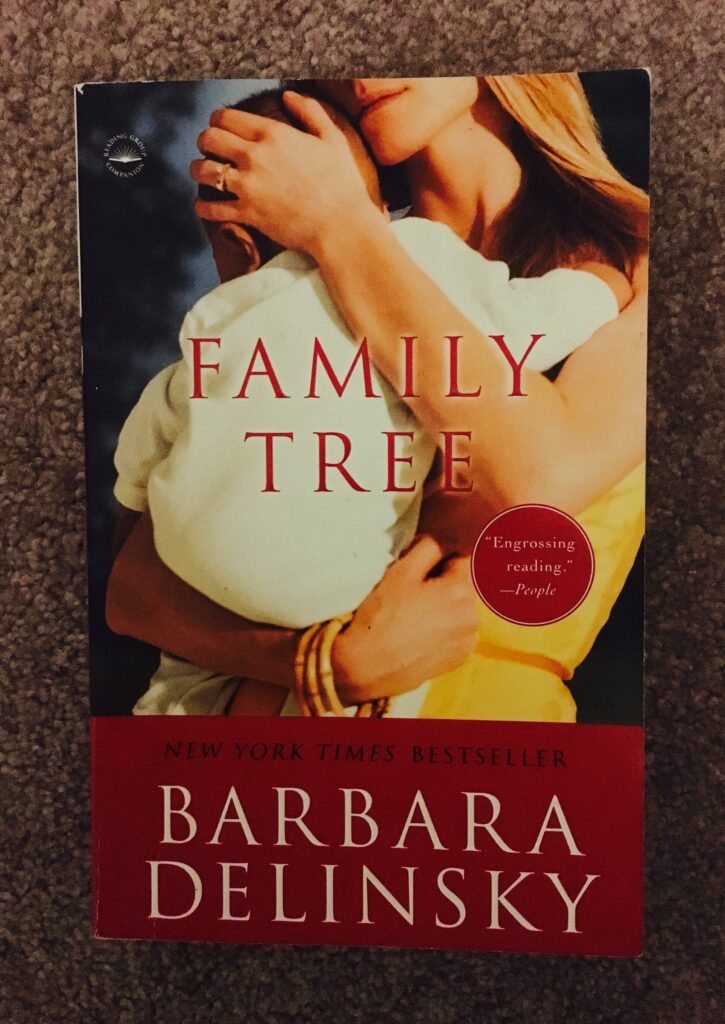
Hi all! I hope you guys liked my review on Will Smith’s autobiography!
I’ve taken a break from biographies and this time I read something fictional. It’s by none other than Barbara Delinsky! And yes- she hits it out of the park yet again with Family Tree.
Let’s dive in, shall we?
This book tells the story of Dana and Hugh Clarke, who’re expecting their first child. When the time finally arrives, what’s supposed to be an ecstatic moment turns the couple’s lives upside down. Their newborn daughter, though beautiful and perfectly healthy, has darker skin and is discernably of African descent, despite both parents being Caucasian.
As you can imagine, many questions are raised about the girl’s heritage, particularly by Hugh’s parents. Hugh comes from an affluent background with careful documentation accounting for every family member. While on the other hand, Dana’s mother passed away when she was young, and she never knew her father.
Accusations of betrayal ensue, putting a strain on their relationship and the Clarke family questions facts they thought for their whole lives were true.
Dana and Hugh’s daughter’s birth takes them as well as those close to them on an explorative journey encompassing hard looks at internalized bigotry and classism, while most of all, engaging in much self-reflection.
Honestly, I did not want this book to end. I felt sad as I read the last page. I thought: “No! There has to be more!” I kid you not, every book Barbara Delinsky writes is so gripping that you think about them long after you’ve finished reading it. If I haven’t mentioned this already, (and I’m sure I have) her writing simply amazes me time and time again.
On top of that, I’ve been doing a lot of self-reflecting, so I really appreciate seeing authors go in-depth with their characters in this respect.
Overall, please take the time to seek out Family Tree. It’s a fantastic read that won’t disappoint.
Blog Post #34: Will Review

In West Philadelphia born and raised, on the playground is where I spent most of my days… Hey everyone! I hope you all are staying healthy and safe during this time. I’m really sorry that I haven’t posted in a while.
But… I’ll try to make it up to you with this week’s review! I’m still really into autobiographies and recently found a good one.
It’s Will by Will Smith!
Most of you probably know him from the hit TV series, The Fresh Prince of Bel-Air, or the Bad Boys franchise. Here, we get a glimpse into how he became the person/entertainment superstar he is today.
Certain things I’ve always appreciated about Will Smith, especially lately, are his honesty and down-to-earth personality, which shines through in Will.
He begins with his upbringing, which included describing the emotional as well as physical abuse inflicted by his father. In the book, he delves into how these traumatic events deeply impacted his perception of himself and what it means to truly be happy.
Of course, there are hilarious moments, with explaining why he actually paid his own child support. (I know – crazy right?)
From detailing how he met DJ Jazzy Jeff and becoming a multimillionaire at 20 years-old, (then rapidly losing the money) to befriending Nelson Mandela and his daughter, Willow, shocking him one day by shaving her head, so many elements of Will Smith’s book will make you gasp out loud.
Also, another reason why I found the novel quite fascinating is his insightfulness. In the latter half, Will incorporates his profound journey of discovering self-worth and articulates it incredibly well. At one point, he went to great lengths so he could engage in self-care, which proved to be a productive, but further, an emotional time.
Overall, Will Smith is so transparent in this book. He draws readers in by highlighting the defining moments of his life and career, ultimately crafting an excellent autobiography.
Blog Post #33: Think Like A Monk Review

Hi, all!
I’m back! It’s been how long? (sorry!) But I’ve got a good one for you! This week’s review is going to be on Think Like A Monk, by Jay Shetty.
Think Like A Monk provides readers with so much insightful advice that I’ll never forget. I’m super happy I found this book and can share my thoughts on it here.
Shetty was a monk for three years, learning profound lessons during his time at an ashram in India. Taking what he learnt, Shetty has since adopted the corresponding values and applied them to his everyday life. He thus, shares them, including useful tips on how people are able to live meaningfully.
An overarching theme Shetty discusses throughout encompasses achieving one’s “dharma” – establishing what you are skilled at, then finding a way to harness it and serve others.
Another specific takeaway for me is more effectively using negative emotions, which obviously are inevitable. This incorporates being anxious regarding future, potentially unpleasant events, but in experiencing these emotions, going through a careful analysis and ensuring you take the proper measures to, depending on the situation, avoid possible unfavourable outcomes, or make the best of them.
Essentially, channel the negativity and turn it into productivity.
For example, he presents an illustration involving complaining. Say, you don’t like that your partner consistently comes home late from work. It won’t help long-term if you complain to friends about the issue even though, for some, expressing this to them may offer some temporary relief. Rather, directly bring the concern up with your partner. Conflict could arise, but you’re taking necessary steps to resolve it.
Overall, Think Like A Monk is so inspiring. The suggestions Shetty make are hard-hitting and, more importantly, realistically achievable. I have the utmost appreciation for his work. Please, please read this novel!
Blog Post #32: Love, Lucy Review

Hey everyone!
It’s been a minute and I’m happy to be back. This week’s review is on autobiography, Love, Lucy, by none other than the TV icon herself, Lucille Ball.
I’m a huge fan of I Love Lucy, so I was really eager to read about the woman behind its magic. However, I believe it is also the only show I’ve ever seen her in and I had no clue about other projects she’s done. Ball’s life was a whirlwind, to say the least. Many elements in this book truly surprised me.
From losing her father at age four and living with a close relative who was involved in a tragic accident that left him destitute, to juggling various odd jobs and eventually starring in many films, theatre productions, and television programs, there is just so much information Love, Lucy provides that will boggle your mind. Plus, there’s name-dropping galore! Humungous stars like Fred Astaire, Clark Gable and Katherine Hepburn are mentioned several times. What? I enjoy reading about legends interacting with one another.
Another major topic touched on is her real-life marriage to Desi Arnaz, who she has two children with and famously played her onscreen husband, Ricky Ricardo. Readers will receive a glimpse into the numerous challenges they faced as a couple which eventually led to divorce.
In closing, Ball’s work ethic was unbelievable. She worked ridiculously long hours and even her pregnancies didn’t slow her down. I was exhausted, not to mention amazed just reading descriptions of the crazy work schedules she undertook without a second thought. If anyone knows what it takes to reach superstardom, its Lucille Ball. Her legacy is so well-deserved.
Overall, I loved Love, Lucy. Lucille Ball’s refreshing honesty and humbleness is what makes for a great autobiography. I would absolutely recommend it to anyone looking to find solid storytelling by an iconic figure in entertainment.
Blog Post #31: From This Moment On Review

Hi everybody!
Whooooooeeeeeeeeeee. This week’s post is on a REALLY good one folks. I just finished reading Shania Twain’s autobiography, From This Moment On,and am still reeling from it.
Many people know her as the singer who’s broken records, gone on sold-out tours as well as a force to be reckoned with in country music. But, with this book, readers get a glimpse into the very long journey she faced before achieving super stardom.
Twain firstly discusses her difficult childhood growing up in Timmins, Ontario. Not having enough money often was the source of anguish for her family, which ultimately led to a household where physical violence, unpaid bills and lacking basic necessities became the norm. Sometimes she and her siblings were sent to school without lunches, therefore staying hungry throughout the day.
The “Man! I Feel Like A Woman!” hitmaker also talks about how music was a huge help for her. From tragically losing her parents at age twenty-two and taking on the responsibility of keeping the Twain family together, to being subjected to harassment in a male-dominated industry and burnout during the earlier stages of her career, From This Moment On is a stunning tell-all that will amaze readers.
One relevant point Twain makes as well is when she states how saying a person is not allowed to have personal issues if they have a certain socioeconomic status indicates blatant inconsiderateness. She herself, who can speak on this and has been on both sides, mentions that this should not be the case at all. Everyone endures things, no matter what. Though financial stability does definitely bring a sense of comfort, it alone is not enough to provide someone with true happiness.
I literally cannot put into words how incredible this novel is. It has made me cry, laugh, and gasp out loud while reading. I, kid you not, also couldn’t sleep one night because of something she says in the book that sent a chill down my spine.
I have never read an autobiography with so many details included and absolutely loved From This Moment On. I highly recommend it.
Blog Post #30: Brutally Honest Review

Photo courtesy of amazon.ca
Hiya everyone!
I’ve been in a bloggy mood lately.. so here’s another one! This review is going to be about Brutally Honest, an autobiography by Mel B aka Scary Spice from the Spice Girls! I first became a fan when I saw her on the judging panel of America’s Got Talent and was really curious when I first heard that she released a book.
She’s always been vivacious as well as outspoken, which are traits I’ve admired about her since day one. That’s why it is needless to say that Mel B definitely doesn’t hold back in this tell-all work.
She firstly provides a snapshot of her childhood growing up being only one of two biracial children in her Leeds, UK, neighbourhood and multiple encounters with racism. Another experience emphasized is how Mel’s father’s emotional withdrawal from the family as she grew older had a negative impact on her future relationships with men.
If I’m honest, (pun totally intended) I, I’m sure like many others who follow her, had absolutely no clue her ex-husband, Stephen Belafonte, was abusive and even after revealing this fact, I did not expect that the abuse was to the extent she described. I believed she married the love of her life, but little did I know… She later herself clarifies how she is great at pretending, which scared me.
From explanations as to why being a Spice Girl will forever be a part of who she is and numerous career highs to extreme emotional turmoil lasting ten years that chipped away at her self-esteem and then eventually rediscovering her self-worth, the details in Brutally Honest will take readers on a roller coaster ride.
I’m so happy that Mel B is doing (better than) well now. She is such a strong person and I applaud her for being so open and vulnerable.
For those who are looking for just a solid autobiography, I encourage you to consider Brutally Honest.
Blog Post #29: The Answer Is…Reflections on My Life Review

Photo courtesy of simonandschuster.com
Hi everyone!
Its been a while, my apologies for not updating sooner. I need to get better at being more consistent, don’t I? Anyway, this week’s review is going to be on The Answer is…Reflections on My Life, written by the one and only Alex Trebek!
With the chapter stylized as Q&A from the competition show, Jeopardy! which he hosted for over three decades, readers receive a glimpse into the many significant events of this TV legend’s life, as stated in the title.
Trebek is such a class act… One can definitely tell whilst reading. The novel encompasses everything and more you’d expect from him. He talks about his childhood including a scary accident causing him to feel regular bouts of severe pain that lasted twelve years, as well as fond memories of his parents’ kindness whilst growing up. Trebek also discusses crazy experiences as an adult, with chasing after a thief who broke into a hotel room he was staying in and finding out how he has a half-sibling whom, for the longest time, was kept from him.
You will see other more heartfelt moments like when he knew his wife, Jean, was “the one” right after meeting her or profound interactions with a child living in an impoverished country.
All throughout, it is almost as if Alex Trebek is an old friend of yours having an honest conversation about the things that made him who he is today. I cannot stress enough how incredible this human being was.
What continues to amaze me is the way he carried himself prior to his passing. He was extremely humble. If I’m not mistaken, I remember one time during an interview that he already thought of what he would say should he decide to leave Jeopardy!. No fuss involved, just taking thirty seconds to thank everyone for the opportunity.
Do you need a great autobiography you can cuddle up with on a rainy day? Want to laugh and cry? If so, I implore you to consider The Answer is…Reflections on My Life.


